 Austar
1 / 1
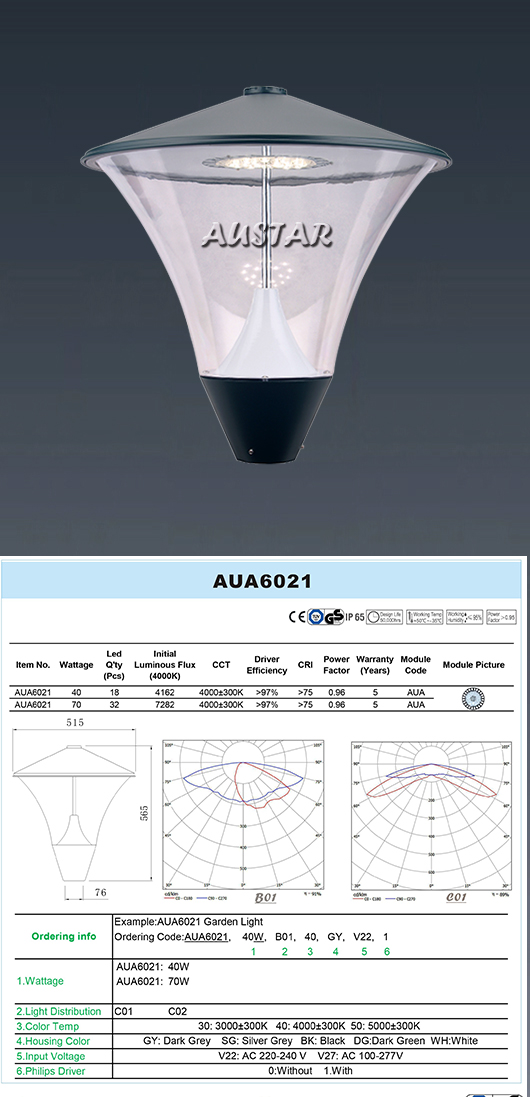
LED outdoor lighting fixtures consume up to 70% less energy than traditional metal halide or high-pressure sodium lamps. This significant reduction in power consumption helps lower utility costs while maintaining high illumination standards.
For standard outdoor applications exposed to dust and rain, an IP65 rating is recommended. If the luminaires are installed in ground level locations subject to temporary flooding or severe weather conditions, IP66 or IP67 ratings are highly recommended.
High-performance LED outdoor luminaires are designed to operate for over 50,000 hours. Under standard usage patterns, this translates to more than 10 years of reliable service with minimal maintenance requirements.
Yes, most modern outdoor luminaires support dimming protocols such as 0-10V or DALI, allowing seamless integration with motion sensors, photocells, and centralized smart city management systems.
Warm white (3000K) is typically preferred for parks, hotels, and residential landscapes to create a cozy atmosphere. Cool white (4000K to 5000K) is optimal for commercial areas, roadways, and security zones where high contrast and clear visibility are required.
Yes, professional lighting projects can be optimized with various asymmetric and symmetric lens distributions (Type I, II, III, IV, or V) to maximize light uniformity and minimize light pollution.