 Austar
Global Flood Lighting: Commercial & Industrial Realities
Modern outdoor flood lighting has transformed from simple high-intensity illumination to highly engineered, smart-grid integrated optic platforms. Decarbonization pressures, intelligent city networks, and strict maritime/structural rules drive this transition. In high-power commercial and industrial projects, buying illumination is now about deploying precision performance, safety, and long-term durability.
Historically, the outdoor lighting industry relied on Metal Halide (MH) and High-Pressure Sodium (HPS) sources. These had high power consumption, brief system lifespans, and significant lumen depreciation. Today, LED systems dominate the market. They combine high luminous efficiency (over 160 lm/W) with complex optics. According to industry research, the global market for outdoor LED floodlights will reach over USD 15 billion by 2028. This growth is driven by massive infrastructure developments in seaport logistics, municipal roadways, high-security sectors, and professional athletic complexes.
Critical Parameters of Modern Industrial Flood Lights
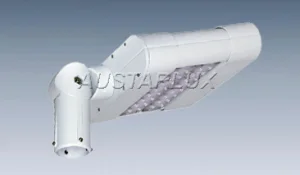
Selecting a robust Flood Lights Supplier requires evaluating complete mechanical and electrical specifications rather than just raw wattage. Key parameters like junction temperature ($T_j$), driver reliability, surge immunity, and optical distributions shape the system's lifetime.
| Feature / Metric | Industrial LED Systems (Austar Standard) | Legacy HID / HPS Solutions | Project Benefit |
|---|---|---|---|
| Luminous Efficacy | 140 - 160 lm/W | 60 - 90 lm/W | Up to 60% energy reduction |
| Rated Lifetime (L70B10) | > 100,000 Hours | 15,000 - 20,000 Hours | Drastically reduced maintenance overhead |
| Surge Immunity Rating | 10kV to 20kV SPD (Built-in) | Negligible | Protects against grid spikes & lighting strikes |
| Ingress / Impact Protection | IP66 & IK08 / IK10 | IP54 / IP65 & IK06 | Resists high wind load, rain ingress & impacts |
| Color Rendering Index (CRI) | Ra > 70 / 80 / 90 (Customizable) | Ra 20 - 60 | Enhanced visual clarity, safety & security CCTV feed |
Macro Industry Trends & Next-Generation Technology
The outdoor lighting market is moving towards total integration. Advanced manufacturers utilize smart features such as NEMA and Zhaga socket interfaces to run IoT sensors. These support dynamic dimming, automated maintenance tickets, and real-time power monitoring.
Furthermore, dark-sky compliance has become a major legislative priority globally. Modern flood lighting now emphasizes precise optical control. By using asymmetric light distributions, light spill and glare are controlled. Optical shielding ensures the output directs solely onto target zones like docks, roadways, and yards without polluting neighboring areas or the night sky.