 Austar
1 / 1
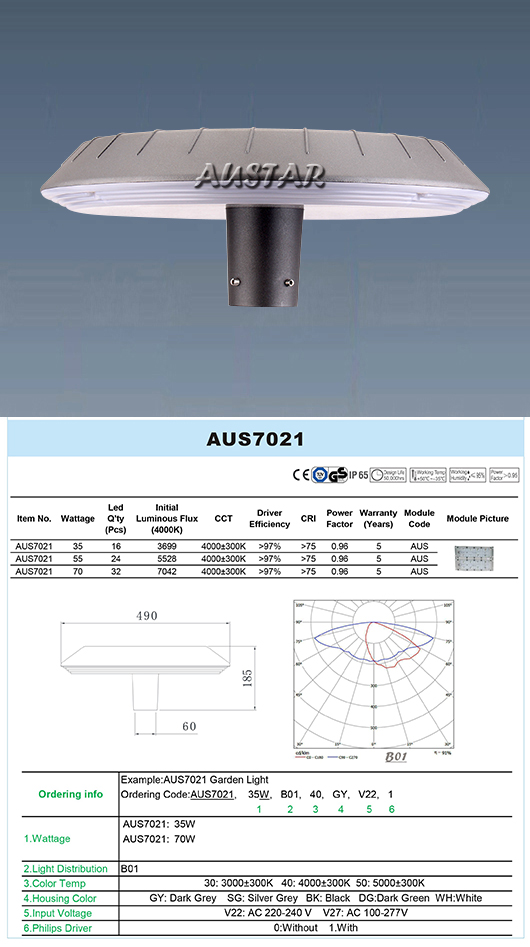
LED outdoor lighting offers significant energy savings of up to 70% compared to traditional metal halide or high-pressure sodium fixtures. Additionally, LEDs have a much longer lifespan, reduce maintenance costs, and provide superior light quality with better color rendering and directional control.
Weatherproof ratings, such as IP65 or IP66, indicate the level of protection against dust and water ingress. High IP ratings ensure that outdoor light fixtures can withstand harsh weather conditions, including heavy rain, snow, and dust storms, ensuring long-term operational reliability.
Yes, modern LED street lights are highly compatible with smart control systems. Features such as dimming schedules, motion sensors, photocells, and centralized monitoring management can be easily integrated to maximize energy efficiency and improve public safety.
Typically, color temperatures between 3000K (warm white) and 4000K (neutral white) are recommended for public outdoor spaces. 3000K is often preferred for residential areas to minimize light pollution and skyglow, while 4000K is widely used for major roads and commercial zones to enhance visibility.
Unlike traditional lamps that emit light in all directions, LEDs utilize specialized lenses (optics) to direct light precisely where it is needed. This reduces light spill into unwanted areas (light pollution) and ensures uniform illumination on roads, pathways, and building facades.