2026 Top Outdoor Lamp Types for Global Buyers

Time:2026-10-30 Author:Oliver
0%

Outdoor lighting does more than mark a path after sunset. It helps people move safely, find entrances, and use gardens or commercial spaces comfortably. For global buyers, choosing an Outdoor Lamp means balancing light output, durability, appearance, and installation needs. The right choice depends on the site, not just the product photo.

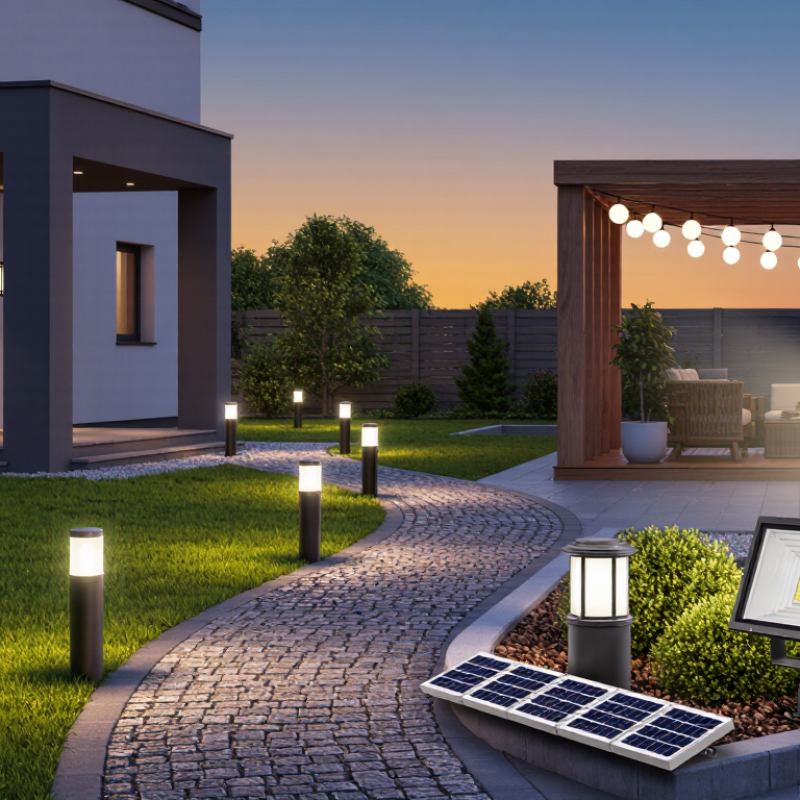
This guide introduces popular types for 2026, including wall lights, pathway lights, bollards, floodlights, landscape spotlights, string lights, and solar models. A low bollard can softly trace a driveway, while a floodlight may suit a loading area that needs broader coverage. Details matter. Compare beam direction, brightness, color temperature, materials, and expected maintenance before ordering. Check weather-resistance ratings and confirm that electrical specifications and required certifications match the destination market. Requirements vary by location, so buyers should verify them with qualified suppliers or local professionals.

A product that performs well beside a sheltered patio may struggle near a salty coastline or in a harsh winter. That difference is easy to underestimate. This overview offers practical selection points, but no single lamp type suits every project. Even a carefully prepared specification can miss what users notice at night: glare on a window, a dark step, or uneven light across a walkway. Use the categories as a starting point, then assess samples or lighting plans against the actual site.
2026 Top Outdoor Lamp Types for Global Buyers

Outdoor Lamp Basics and Their Main Functions

Outdoor lamps do more than make a garden visible after sunset. They help people find entrances, notice changes in ground level, and use outdoor spaces with greater confidence. The right fixture depends on the task. Path lights mark walkways, wall lights brighten doors, step lights reveal edges, and floodlights cover wider areas. Small detail. It matters.

Start with the space, not the fixture’s appearance. Note where people walk, where shadows fall, and whether nearby windows could receive glare. A warm, shielded beam often feels calmer near a patio, while a broader beam may suit a driveway. Aim light downward where practical. This keeps useful light on the ground instead of in someone’s eyes. For wet or dusty locations, check the fixture’s ingress-protection rating and installation guidance. Exposure varies by site.

Power choice also changes daily use. Mains-powered lamps can provide steady output, while solar models depend on sunlight, placement, and seasonal weather. Motion sensors can reduce operating time, but poor positioning may trigger them repeatedly. That happens. For international projects, verify local voltage compatibility and installation requirements before ordering. Review the layout after dusk, when dark corners become obvious. A simple sketch helps, though it cannot predict every reflection or shadow. Consider maintenance too: reachable fittings and replaceable components are easier to keep working over time.

Key Outdoor Lamp Types Available to Global Buyers in 2026

Outdoor lamp buying in 2026 is less about finding one universal fixture and more about matching light to place. Wall lights suit doors and narrow paths; bollards mark garden edges without lighting whole areas. Floodlights cover driveways and work zones, while recessed in-ground lights highlight steps or planting. Solar path lamps simplify installation where sunlight is dependable. Placement changes everything. The International Energy Agency has reported that lighting uses about 15% of global electricity, making efficient sources relevant beyond indoor spaces. For buyers comparing specifications, check measured light output, beam angle, color temperature, and replaceable components—not wattage alone.

For a coastal walkway, sealed wall fixtures resist moisture better than exposed fittings, while shielded optics reduce glare for neighbors. The U.S. Department of Energy notes that LED lighting can use at least 75% less energy and last much longer than incandescent lighting; actual results depend on product quality and operating conditions. Ask suppliers for test reports and stated ingress protection ratings, then compare warranty terms. Solar units can look appealing on a catalog page, but winter shade may leave a path dim. That trade-off is easy to overlook. A lumen figure cannot tell you whether light spills into a bedroom window, either.

2026 Top Outdoor Lamp Types for Global Buyers

Typical minimum water-protection ratings to consider when comparing outdoor lamp types.

The chart shows the second digit of the IP code, which indicates water-ingress protection under IEC 60529. For example, IP65 is protected against water jets, while IP67 and IP68 cover immersion under specified conditions. These are general selection guidelines, not universal requirements; confirm the product rating and installation conditions before purchase.

How Outdoor Lighting Technologies and Power Sources Differ

Outdoor lamps differ not only in shape, but in how they produce and store power. Most use LED modules, which draw relatively little electricity and offer several color temperatures. Warm white can make a timber deck feel welcoming; cooler light can help reveal steps and paths. Check the stated lumen output, not just the wattage. They measure different things.

Wired lamps provide steady light when circuits are properly installed, but placement depends on accessible power and suitable outdoor fittings. Solar models avoid trenching and work well in sunny, unobstructed areas. Yet a shaded wall or several cloudy days can leave them dim by evening. Battery-powered lamps offer flexible placement, though charging and battery replacement need attention. Motion sensors can save energy near entrances, but passing branches may trigger them. A small detail, with real consequences.

For global buyers, compare operating voltage, charging method, weather resistance, and replacement-part availability before choosing a technology. Ratings describe tested conditions; they do not make every installation suitable for every climate. Salt spray, dust, and freeze-thaw cycles can expose weak seals over time. I would avoid assuming that one power source suits an entire property. A mixed setup may be more practical, although it adds a little planning.

Choosing Outdoor Lamps for Climate, Location, and Use

2026 Top Outdoor Lamp Types for Global Buyers

Outdoor lamps perform best when their construction matches the weather and location. Coastal buyers should seek corrosion-resistant housings and sealed connections. Salt spray can damage exposed metal. In rainy regions, check the fixture’s ingress protection rating and follow installation instructions. A doorway light needs a different beam from a garden path light. Small details matter.

For open gardens, shielded bollards or low path lights can mark edges without shining into nearby windows. Covered patios may suit decorative pendants, but damp-rated fixtures may not withstand direct rain. Solar lamps help where wiring is difficult. Yet shade and short winter days can reduce their output. Choose warm, moderate light for seating areas, and brighter, well-aimed light near steps. A common oversight is choosing by appearance alone. Maintenance matters, too.

Tips: Check climate exposure, mounting surfaces, and power access before ordering. Match the rating to the real installation location, not just the product photo. Ratings cannot compensate for poor installation. Test one lamp at night before buying several.

Safety Standards and Installation Factors Across Markets

Outdoor lighting choices often include path lights, wall lanterns, step lights, and motion-sensing floodlights. Yet the fixture type is only part of a safe purchase. Check the electrical certification required in the destination market, because accepted marks and installation rules differ. An IP rating describes protection against dust and water; it does not prove that a fixture suits every exposed location.

Small details matter. A coastal path light may face salt spray, while a covered porch fixture may still get wind-driven rain. Match the specified IP rating and materials to the actual exposure, not just the product photo. Check the supply voltage, wiring method, and whether the circuit needs residual-current protection under local rules. Keep connections out of standing water. Have a qualified local electrician review fixed wiring when required.

Mounting also affects safety. Leave room to open access covers, use suitable fasteners for the wall material, and avoid placing bright beams at eye level. Keep fixtures clear of doors, gutters, and likely contact points. A label can look reassuring. It is not the whole story. I would verify current local requirements before ordering; that extra check can feel slow, but assumptions across markets are easy to get wrong.

2026 Top Outdoor Lamp Types for Global Buyers - Safety Standards and Installation Factors Across Markets

Outdoor lamp type Common applications Typical environmental protection guidance Installation and safety factors Relevant standard examples
Wall-mounted outdoor lights Entrances, patios, exterior corridors, and building perimeters. IP44 may suit sheltered positions; IP65 is a common selection for more direct exposure to rain or dust. Choose for the actual exposure and mounting orientation. Use a suitable outdoor-rated supply connection, seal cable entries as instructed, and mount to a structurally sound surface. Keep light away from direct view where glare could affect occupants or road users. IEC 60598-1 and, where applicable, IEC 60598-2-1 for fixed general-purpose luminaires.
Floodlights and security lights Yards, building façades, loading areas, and security zones. IP65 or IP66 is commonly selected for exposed installations. Confirm the product’s rating covers the installed configuration, including any sensor or accessory. Use a load-bearing bracket and appropriate fasteners. Aim carefully to limit glare and light spill. For mains-powered units, use the local code-required protective devices and have fixed wiring handled by a qualified installer. IEC 60598-1 and IEC 60598-2-5 for floodlights, where applicable.
Bollard lights Garden paths, campuses, driveways, and pedestrian areas. Select an IP rating appropriate to rain, irrigation, dust, and possible water pooling. Consider corrosion-resistant materials in coastal or de-icing-salt environments. Provide a stable foundation and protect buried wiring using locally approved methods. Check that the mounting base, cable gland, and drainage arrangement match the manufacturer’s instructions. IEC 60598-1 and, depending on design, IEC 60598-2-1 for fixed general-purpose luminaires.
In-ground and recessed ground lights Landscape accents, paths, steps, and architectural details. IP67 or IP68 products are often considered where temporary or prolonged immersion is possible. The rating alone does not guarantee suitability for every installation or water condition. Plan drainage and prevent standing water where required. Check the allowable load if the fitting may be walked or driven over, and follow specified cable, sleeve, and installation-depth requirements. IEC 60598-1 and IEC 60598-2-13 for recessed luminaires in the ground, where applicable.
Street and area lights Public roads, private roads, car parks, and large outdoor spaces. IP66 is a common design choice for exposed roadway luminaires; confirm the required rating and environmental performance for the project. Verify pole strength, wind loading, electrical protection, earthing, and access for maintenance. Select optics and mounting height to meet local lighting design and glare-control requirements. IEC 60598-1 and IEC 60598-2-3 for road and street lighting luminaires, where applicable.
Pathway stake lights Garden paths, planting beds, and low-level landscape lighting. Choose an outdoor rating suitable for rain, irrigation, and dust. Check whether the rating applies with the supplied stake and cable installed as directed. Avoid locations where lawn equipment or foot traffic could damage the fitting or wiring. For solar models, check battery replacement guidance, charging conditions, and safe battery disposal instructions. IEC 60598-1 and the applicable IEC 60598-2 product standard, depending on construction and intended use.
Outdoor string lights Covered patios, terraces, events, and decorative garden lighting. Use only products specifically rated for the intended outdoor exposure. IP44 is commonly used for splash-protected settings; more exposed locations may call for a higher rating. Support the cable independently at the stated intervals; do not overload sockets or connect more sets than permitted. Protect plugs and connections from water as instructed and keep wiring clear of walkways. IEC 60598-1 and IEC 60598-2-20 for lighting chains, where applicable.
Market-specific compliance examples
European Union / EEA Check applicable EN IEC 60598 series requirements and relevant market rules, such as electrical safety, electromagnetic compatibility, and restricted-substance obligations. Required conformity documentation depends on the product and its intended use.
United States UL 1598 is a relevant luminaire safety standard for many fixed lighting products. Check applicable National Electrical Code requirements, including wet- or damp-location suitability and outdoor circuit protection, for the specific installation.
Canada CSA C22.2 No. 250.0 is a relevant luminaire safety standard. Confirm the required Canadian certification and local electrical code requirements before sale or installation.
Australia / New Zealand Relevant requirements may include the applicable AS/NZS 60598 series and market-specific electrical equipment obligations, including RCM requirements where applicable. Verify the product category and current local rules.
India The applicable IS 10322 series requirements and any current mandatory certification rules depend on the luminaire type and product category. Confirm the latest requirements for the intended product and market.

Buyer note: IP guidance above is indicative, not a universal legal minimum. Under IEC 60529, the first IP digit relates to protection against solid objects and the second to water ingress; an “X” means that digit has not been specified. IP ratings do not by themselves establish resistance to corrosion, UV exposure, impact, or every installation condition. Confirm the current national standard edition, certification, product marking, supply compatibility, and installation rules for each destination market.

FAQS

How do outdoor lamps make a garden safer after sunset?

They help reveal entrances, walkway edges, and changes in ground level. Small details matter.

Which lamp types suit common outdoor areas?

Path lights mark walkways, wall lights brighten doors, step lights show edges, and floodlights cover wider spaces.

How should I choose where to aim a lamp?

Aim light toward the ground where practical. Check nearby windows and patio seats for glare.

What should I check before installing a lamp outdoors?

Match its protection rating and materials to the actual exposure. Wind-driven rain can reach covered porches.

Do solar lamps work reliably in every season?

Their output depends on sunlight, placement, and seasonal weather. Shaded corners may stay dim.

Can motion sensors reduce how long outdoor lamps operate?

Yes, but poor placement may trigger them repeatedly. That can be annoying.

What should I check when buying lamps for another market?

Verify local certification, voltage, wiring rules, and installation requirements. A product label is not the whole story.

What helps keep fixed outdoor lighting safe and maintainable?

Ask a qualified local electrician to review fixed wiring when required. Leave access covers reachable and keep connections away from standing water.

How can I spot problems with the lighting layout?

Review it after dusk, when dark corners appear. A sketch helps, but I still miss some shadows.

Conclusion

This guide introduces the Outdoor Lamp and its practical roles in improving visibility, supporting wayfinding, and shaping the atmosphere of outdoor spaces. It compares common options for global buyers, including wall lights, pathway and bollard lights, floodlights, landscape spotlights, and portable or solar-powered lamps. Each type serves different needs, from illuminating entrances and walkways to highlighting garden features or providing flexible light where fixed wiring is impractical.

The guide also explains how lighting technologies and power sources affect brightness, energy use, maintenance, and installation. It offers a practical framework for choosing lamps based on climate, location, and intended use, while considering exposure to rain, dust, heat, and cold. Finally, it highlights the importance of checking relevant safety requirements, selecting suitable materials and protection ratings, and planning installation carefully so outdoor lighting is dependable, comfortable, and appropriate for its setting.


Oliver

Oliver

Oliver is a seasoned marketing professional with a wealth of expertise in driving brand awareness and engagement. With a deep understanding of our company's product offerings, he consistently delivers high-quality content that enriches our professional blog. His insights not only shed light on......