A ceiling fixture does more than fill a blank spot overhead. It shapes how a room feels, how clearly people see, and where attention naturally falls. The right Ceiling Light can soften a bedroom, brighten a kitchen counter, or make a dining table feel like the room’s center. The wrong one can create glare. Or leave dark corners.
Lighting designer Richard Kelly described three effects of light as “ambient luminescence, focal glow, and play of brilliants.” His framework remains useful when comparing ceiling fixtures: some spread an even wash, while others direct attention or add sparkle. A fixture’s appearance matters, but so do its brightness, beam direction, ceiling height, and the room’s daily tasks. A polished product photo cannot show every shadow it may cast at home.
This guide introduces ten common types: flush-mount, semi-flush-mount, recessed, pendant, chandelier, track, linear, cove, LED panel, and ceiling-fan lights. Each has trade-offs. Recessed lights can look discreet, yet their placement needs careful planning. Pendants bring focused light, though low ceilings may make them awkward. There is no universal winner. Room dimensions, existing wiring, and personal comfort all matter, and even a well-chosen fixture may need a different bulb or dimmer to feel right. Use the overview to compare options, notice practical details, and narrow the shortlist before choosing a fixture for your space.
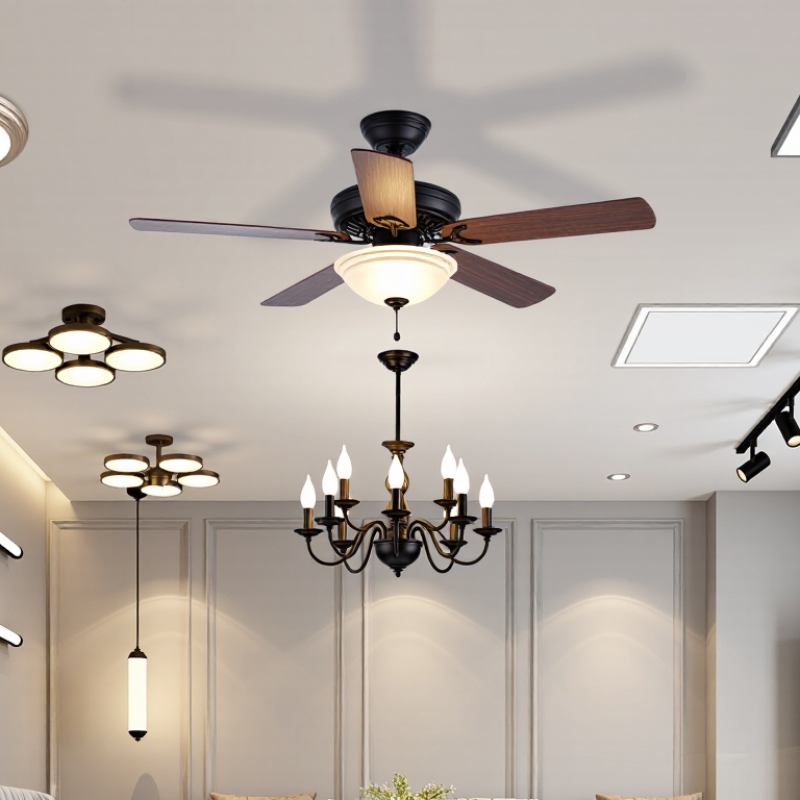
Ceiling lights are luminaires mounted on or built into a ceiling, designed to illuminate a room from above. They are classified by how they are installed, how they distribute light, and what task they serve. Mounting types include flush-mount, semi-flush, pendant, chandelier, recessed, and track fixtures. A glass dome close to the ceiling, for example, is usually a flush-mount fixture.
Light distribution provides another useful distinction. Direct lighting sends light downward, while indirect lighting reflects it off ceilings or walls. Diffused fixtures soften the beam through a shade or lens. These categories can overlap. That is useful, but a little confusing when comparing products. A recessed fixture may provide general illumination or highlight a countertop, depending on its placement and beam angle.
Purpose also matters: ambient lighting fills a room, task lighting supports activities, and accent lighting draws attention to details. The U.S. Department of Energy reports that residential LEDs use at least 75% less energy and last up to 25 times longer than incandescent lighting. This is relevant when comparing light sources, though it does not determine a fixture’s classification. A practical check is to picture the ceiling height, the room’s use, and where shadows might fall. A bright fixture can still leave a desk dim.
| Type | How It Is Defined | Typical Light Source | Common Uses | Typical Installation |
|---|---|---|---|---|
| Flush-Mount | A fixture mounted directly against the ceiling, with little or no gap between the fixture and ceiling surface. | Integrated LED or replaceable LED, CFL, or incandescent bulbs | Bedrooms, hallways, closets, and rooms with lower ceilings | Surface-mounted to an electrical ceiling box |
| Semi-Flush-Mount | A ceiling-mounted fixture suspended a short distance below the ceiling, leaving an open gap around its canopy. | Integrated LED or replaceable bulbs | Bedrooms, dining areas, and living rooms with moderate ceiling height | Attached to a ceiling box with a short stem or decorative support |
| Pendant | A fixture that hangs from the ceiling on a cord, chain, or rod, often directing light downward. | Integrated LED or replaceable bulbs | Kitchen islands, counters, dining tables, and entryways | Suspended from a ceiling box; height is often adjustable |
| Chandelier | A suspended decorative fixture with multiple arms, branches, or light sources. | Multiple integrated LEDs or replaceable bulbs | Dining rooms, foyers, and living rooms | Hung from a ceiling box, typically by a chain or stem |
| Recessed Downlight | A light installed in a ceiling opening so that most of the housing sits above the finished ceiling. | LED module or a recessed housing with a compatible lamp | General, task, or accent lighting in kitchens, corridors, and living areas | Installed in a ceiling cutout; requires suitable clearance and housing |
| Track Lighting | A system with multiple adjustable light heads attached to an energized ceiling track. | LED or other compatible track-mounted lamps | Art displays, retail areas, kitchens, and flexible accent lighting | Track is mounted to the ceiling or suspended; heads can be repositioned |
| Ceiling Fan with Light | A ceiling fan fitted with one or more light sources, combining illumination with air circulation. | Integrated LED or replaceable bulbs | Bedrooms, living rooms, and other spaces where air movement is useful | Mounted to a fan-rated ceiling outlet box or support |
| Linear Surface-Mount | An elongated fixture attached directly to the ceiling, designed to distribute light along a broad area. | Usually an integrated LED light engine; some models use replaceable lamps | Utility rooms, garages, corridors, and work areas | Surface-mounted to the ceiling and connected to building wiring |
| Troffer or LED Panel | A broad, flat fixture designed to provide even, diffuse light, commonly used in grid or suspended ceilings. | Integrated LED; older troffers may use fluorescent tubes | Offices, classrooms, healthcare spaces, and commercial interiors | Recessed into a compatible ceiling grid or surface-mounted with a frame |
| Cove Lighting | Indirect lighting concealed in a ceiling recess or ledge, directing light toward the ceiling or wall. | LED strips or linear LED systems | Ambient lighting in living rooms, hotels, and architectural interiors | Installed within a cove or ledge; the light source is generally hidden from direct view |
It is a fixture mounted on or built into a ceiling. It lights a room from above.
Common types include flush mounts, semi-flush fixtures, pendants, chandeliers, recessed lights, and track lights. A glass dome close to the ceiling is often a flush mount.
Direct lighting shines downward. Indirect lighting reflects light off ceilings or walls, while diffused fixtures soften the beam. Categories can overlap.
A flush mount sits close to the ceiling and is often practical in low spaces. Check its brightness, too.
Pendants hang lower and can direct light onto an island. Recessed lights may also work, but poor placement can leave shadows on the counter.
Softer, dimmable light can feel more comfortable. A broad diffuser may reduce glare, though the room can still feel too bright.
Not always. They keep the ceiling visually clear, but may require ceiling access and careful spacing. Poorly aimed lights can leave work surfaces dim.
Measure the ceiling height and fixture width. Consider the room’s use, shadows, and style. A large chandelier may overwhelm a compact dining area.
Confirm dimming compatibility, lamp replacement options, beam pattern, and lumen output. Test the switch location if possible. Small details matter.
Ceiling lights are fixtures mounted on or suspended from the ceiling to provide general illumination, focused task lighting, or decorative accents. They can be classified by their shape, mounting style, light direction, and intended purpose. The ten main types include flush-mount, semi-flush-mount, pendant, chandelier, recessed, track, linear, drum, fan-integrated, and surface-mounted lights. Each offers different benefits, from a compact profile for limited headroom to adjustable beams for highlighting specific areas.
Choosing the right Ceiling Light depends on the room’s dimensions, ceiling height, function, and overall style. A low ceiling may call for a flush fixture, while a taller room can accommodate a pendant or chandelier. Consider how much light the space needs and whether it is used for cooking, relaxing, working, or gathering. By balancing practical requirements with the room’s design, you can select lighting that feels comfortable, works effectively, and complements the space.

 Austar