China Top 10 Highway Lamp Manufacturers for Global Buyers?

Time:2026-10-15 Author:Charlotte
0%

China Top 10 Highway Lamp Manufacturers for Global Buyers? This question deserves more than a factory list. Global buyers must examine optical performance, thermal control, certification readiness, warranty terms, and field experience. A highway lamp is not merely a bright fixture. It must produce consistent road luminance, limit glare, resist rain and dust, and operate reliably beside fast-moving traffic.

The International Energy Agency reports that lighting represents about 15% of global electricity consumption. Its Energy Efficiency 2023 analysis also highlights LEDs and controls as important efficiency opportunities. For road infrastructure, the practical challenge is sharper. Poorly selected optics can create dark gaps, excessive glare, or wasted light beyond the carriageway. Dr. John Bullough, a recognized roadway-lighting researcher at the Lighting Research Center, has emphasized that roadway lighting should support “visibility, safety, and comfort,” rather than brightness alone. That principle guides this manufacturer review.

Real projects reveal more than catalog photographs. Buyers should compare LM-80 and TM-21 evidence, ingress protection, impact resistance, surge protection, photometric files, and completed highway references. CIE 115 recommendations and EN 13201 practices can also help structure technical comparisons, although local requirements still differ. Check carefully.

This introduction evaluates ten Chinese manufacturers through a global procurement lens. It considers engineering capability, production consistency, customization, export experience, and after-sales support. No ranking is permanently perfect. Supplier data can change, and impressive samples may not represent long-term field performance. Therefore, readers should request independent test records, recent project contacts, and sample validation before signing a large order. The shortlist is useful, but verification remains essential.
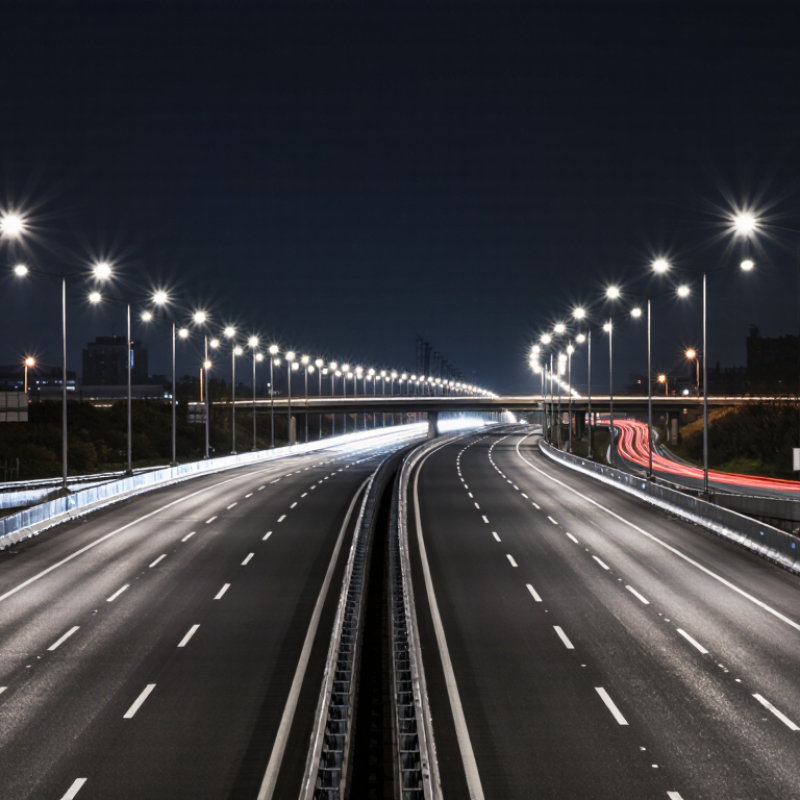
China Top 10 Highway Lamp Manufacturers for Global Buyers?

What Defines a Leading Highway Lamp Manufacturer in China

A leading highway lamp manufacturer in China is defined by verified performance, not a polished catalog. The International Energy Agency estimates that lighting consumes about 15% of global electricity. Therefore, efficient highway luminaires can reduce operating costs across long road networks. A capable manufacturer should provide measured efficacy, power tolerance, glare control, and lifetime data.

Look for testing aligned with CIE 115 and EN 13201. These references support road-lighting design, visibility, and uniformity assessments. Independent laboratories should verify photometric files, electrical safety, ingress protection, and surge resistance. The U.S. Department of Energy’s 2023 Solid-State Lighting research report shows that higher LED efficacy remains an active technical target. Efficiency matters, but thermal control matters more.

Ask how the factory handles 50°C cabinets, coastal salt, vibration, and driver failures. Request LM-79 and LM-80 evidence where applicable, plus maintenance records from comparable highways. A reliable supplier should explain replacement procedures and spare-part availability clearly. No factory is perfect. I would question any supplier promising an unchanged lifetime without field data. Production audits, sample testing, and traceable quality records reveal more than sales language. That discipline defines a manufacturer prepared for global buyers.

China Top 10 Highway Lamp Manufacturers for Global Buyers

What Defines a Leading Highway Lamp Manufacturer in China?

A leading highway lamp manufacturer should be able to design and supply luminaires that support different road classifications and lighting targets. The chart shows the maintained average luminance levels commonly referenced for M-class roads under EN 13201-2. Higher-class roads require higher luminance performance, consistent optical control, reliability, and verified photometric data.

Key Criteria for Evaluating Highway Lamp Manufacturers

Choosing among the top highway lamp manufacturers requires more than comparing catalog prices. Global buyers should examine real project experience, technical capability, and production consistency. Ask for completed highway references, installation photos, and measured lighting results. A manufacturer with field experience can explain glare control, light distribution, mounting height, and maintenance access in practical terms.

Request complete technical documents before placing an order. These should include photometric files, power consumption data, surge protection details, thermal management tests, and ingress protection ratings. Check whether the proposed lamp maintains stable output in rain, dust, heat, and winter temperatures. Materials also matter. Aluminum housing, corrosion-resistant coatings, and sealed cable entries can influence service life near coastal roads. Small details often become expensive problems.

Reliability depends on more than the lamp itself. Evaluate driver quality, spare-part availability, inspection procedures, and warranty handling. Ask how each production batch is tested, not only how the sample performed. A trustworthy manufacturer should provide traceable reports and answer technical questions clearly. Certifications are useful, but they should match the destination market and actual product configuration. Do not accept vague claims.

No supplier is perfect. Buyers should record weaknesses, such as limited customization or slow engineering replies. This reflection helps balance price against project risk. Factory communication also deserves attention: unclear drawings can cause delays during pole installation. A short pilot order, followed by nighttime measurement, may reveal uneven illumination that brochures never show.🟀

Profiles of China’s Top 10 Highway Lamp Manufacturers

China’s Top 10 Highway Lamp Manufacturers represent a broad range of engineering strengths. Some focus on high-power LED road lighting, while others specialize in solar-integrated systems. Their factories commonly use aluminum housings, tempered glass, and corrosion-resistant coatings. These materials matter beside coastal highways, where salt air attacks exposed metal.

A reliable profile should show more than product photographs. Check years of manufacturing experience, independent test reports, optical design capability, and production capacity. Ask about lighting distribution, surge protection, heat management, and ingress protection ratings. Export experience is useful, but it does not guarantee consistent quality. Factory audits, sample testing, and clear warranty terms remain necessary. Rankings can change as technology and project performance develop. That is an inconvenient truth.

Tips: Request a complete datasheet before comparing prices. Confirm lumen output under real operating conditions, not only laboratory figures. Review installation drawings and spare-part availability. For solar highway lamps, examine battery chemistry, charging data, and winter performance. A pilot section can reveal glare, uneven brightness, or maintenance problems early. Keep records of every specification and approval. Small details often decide long-term reliability.

Product Capabilities and Technology Comparison

For global buyers, comparing China’s top ten highway lamp manufacturers requires more than lumen figures. The useful question is how each supplier converts laboratory performance into stable road lighting. Strong product lines usually offer LED modules from 120 to 190 lumens per watt, optional 3000K to 5000K color temperatures, and optics designed for narrow, medium, or wide roads. Housing quality matters too. Die-cast aluminum bodies, powder coating, and sealed connectors help lamps face rain, dust, salt, and summer heat. Yet datasheets are not always comparable; test conditions can differ.

Technology separation appears in thermal design and control systems. Better-engineered fixtures use fin structures, internal heat paths, and surge protection suited to unstable grid conditions. Some support 0–10 V, DALI, photocells, or wireless nodes, while simpler models rely on fixed timers. Ask for LM-80 or TM-21 evidence, ingress protection reports, thermal-cycle results, and photometric files before approving samples. A road-lighting engineer should also check mounting angles, glare control, maintenance access, and spare-driver availability. Small details often decide service cost.

In project evaluations, request a real installation reference with pole spacing, mounting height, traffic class, and measured illuminance. That evidence is more useful than polished brochures. Factory audits can reveal assembly discipline, aging tests, calibration records, and response times for defects. I would not treat the highest efficiency as the automatic winner. A lamp with harsh glare or weak corrosion resistance may perform poorly after one coastal winter. The comparison remains imperfect, because climate, road surface, and maintenance practice change the result.

How Global Buyers Can Select the Right Manufacturer

Selecting among China’s top highway lamp manufacturers requires more than comparing wattage and price. The International Energy Agency reports that lighting consumes about 15% of global electricity. This makes verified efficiency important, but efficiency alone is not enough. Ask each manufacturer for LM-80 and TM-21 evidence, complete photometric files, surge testing, and thermal performance records. A laboratory figure may look impressive. It can still differ from field performance.

CIE 115:2010 and EN 13201 emphasize maintained illuminance, uniformity, glare control, and road classification. Therefore, request a lighting simulation using your actual road width, pole spacing, mounting height, and traffic conditions. Check IP66 or higher protection, suitable IK ratings, corrosion treatment, and replaceable surge protection. The U.S. Department of Energy states that LED lighting can use at least 75% less energy than incandescent technology and last up to 25 times longer. That comparison is useful, but highway projects need lifecycle calculations based on operating hours and maintenance access. I would also audit the factory, verify component traceability, and contact recent overseas buyers. A polished sample proves little. My own screening can still miss supplier weaknesses, especially after installation. Require a clear warranty, spare-part plan, dimming compatibility, and documented after-sales response times before signing.

China Top 10 Highway Lamp Manufacturers for Global Buyers? - How Global Buyers Can Select the Right Manufacturer

Anonymized buyer-screening comparison based on commonly specified highway and road-lighting capabilities in China.

Screening Rank Manufacturer Profile Primary Product Focus Typical Rated Power Typical Luminous Efficacy Ingress Protection Impact Protection Control & Dimming Options Typical Warranty Common Compliance Documents Best Fit for Global Buyers
1 Profile A Modular LED highway luminaires 100–300 W 150–180 lm/W IP66 IK08–IK10 0–10 V, DALI, photocell, NEMA socket 5–7 years CE, RoHS, LM-80/TM-21 available Large road projects requiring high output and easy maintenance
2 Profile B Die-cast aluminum roadway lights 60–240 W 140–175 lm/W IP65–IP66 IK08 0–10 V, PWM, photocell 5 years CE, RoHS, EMC, LVD Municipal streets and medium-to-high traffic roads
3 Profile C High-mast and expressway luminaires 150–400 W 145–170 lm/W IP66 IK08–IK10 Zhaga/NEMA-ready, DALI-2, smart controllers 5–7 years CE, RoHS, ENEC options Expressways, interchanges and high-mast installations
4 Profile D Cost-optimized LED road lamps 40–180 W 125–160 lm/W IP65 IK08 Fixed output, photocell, optional 0–10 V 3–5 years CE, RoHS, test reports on request Budget-sensitive tenders and standard replacement programs
5 Profile E Smart-network-ready roadway fixtures 80–300 W 145–175 lm/W IP66 IK09–IK10 DALI-2, Zhaga, NEMA, wireless node compatibility 5–7 years CE, RoHS, EMC, LM-80/TM-21 Smart-city projects and remotely managed lighting networks
6 Profile F Solar-compatible highway lamps 40–200 W 130–170 lm/W IP66 IK08 Programmable dimming, motion sensing, remote monitoring 3–5 years CE, RoHS; battery documents vary Off-grid roads and locations with limited electrical infrastructure
7 Profile G Heavy-duty coastal and industrial road lights 100–280 W 140–170 lm/W IP66 IK09 0–10 V, DALI, surge protection upgrades 5 years CE, RoHS, salt-spray testing available Coastal highways, ports and industrial environments
8 Profile H Retrofitting solutions for existing poles 50–220 W 135–165 lm/W IP65–IP66 IK08 Photocell, NEMA socket, 0–10 V 5 years CE, RoHS, EMC, LVD Replacement of conventional HID or HPS roadway fixtures
9 Profile I Custom optical-design roadway luminaires 80–350 W 140–180 lm/W IP66 IK08–IK10 Programmable drivers, DALI, smart-control interfaces 5–7 years CE, RoHS, IES files, LM-79 options Projects requiring customized beam angles and photometric layouts
10 Profile J Compact urban and secondary-road lamps 30–150 W 130–165 lm/W IP65 IK08 Photocell, fixed dimming, optional 0–10 V 3–5 years CE, RoHS, basic safety reports Residential roads, local streets and low-to-medium traffic areas

Note: Specifications shown are realistic market-reference ranges for supplier prequalification, not verified claims about any individual manufacturer. Buyers should request current datasheets, photometric files, certificates, sample test results, warranty terms and project references before placing an order.

FAQS

What defines a leading highway lamp manufacturer?

Verified performance defines one, not a polished catalog. It should provide measured efficiency, glare control, power tolerance, and lifetime data. Claims need evidence.

Which technical documents should buyers request?

Request photometric files, power data, surge protection details, thermal tests, and ingress protection ratings. Ask for independent laboratory reports when possible. Missing documents deserve caution.

Why is thermal management important for highway lamps?

Lamps may operate inside hot cabinets, sometimes near 50°C. Poor heat control can reduce brightness and shorten component life. Efficiency alone is not enough.

How can buyers evaluate real project experience?

Ask for completed highway references, installation photographs, and measured nighttime results. Field records reveal mounting height, light distribution, glare, and maintenance access. Catalogs cannot show everything.

What environmental conditions should highway lamps withstand?

Test performance in rain, dust, heat, winter temperatures, vibration, and coastal salt air. Sealed cable entries and corrosion-resistant coatings help protect the housing. Small weaknesses become costly.

How should production consistency be checked?

Ask how every production batch is inspected, not only how one sample performed. Traceable quality records and sample testing can expose inconsistent output. One good sample proves little.

What should buyers examine beyond the lamp itself?

Evaluate drivers, spare parts, replacement procedures, warranty handling, and maintenance records. A failed driver should not require replacing the entire fixture. That detail matters.

Are certifications enough when selecting a manufacturer?

Certifications are useful when they match the destination market and actual product configuration. They cannot replace field measurements or clear technical answers. Vague claims need questioning.

Should buyers place a pilot order first?

A small pilot order can reveal uneven illumination, unclear drawings, or slow engineering replies. Measure the road at night before expanding the purchase. Brochures may miss problems.

How should buyers reflect on supplier weaknesses?

Record limitations such as restricted customization, slow communication, or incomplete testing. No supplier is perfect, including the preferred one. Balance price against project risk.

Conclusion

China’s highway lighting industry offers global buyers a wide range of manufacturers with different strengths in engineering, production capacity, customization, and international service. A leading Highway Lamp manufacturer is typically defined by reliable product quality, compliance with relevant safety and performance standards, efficient quality control, stable supply capabilities, and the ability to provide professional technical support. Buyers should also evaluate material durability, optical performance, energy efficiency, weather resistance, intelligent control options, warranty policies, and proven export experience.

This overview compares ten representative types of Chinese manufacturers according to their product capabilities, technology development, manufacturing resources, customization services, and support for overseas projects. It also explains how global buyers can select the most suitable partner by considering project requirements, installation conditions, budget, delivery schedule, certification needs, communication efficiency, and long-term maintenance support. By using a structured evaluation process rather than focusing only on price, buyers can identify a dependable manufacturer capable of delivering safe, durable, and cost-effective highway lighting solutions.


Charlotte

Charlotte

Charlotte is a seasoned marketing professional with a deep understanding of the company's portfolio and a passion for elevating its presence in the market. With a keen eye for detail and a commitment to excellence, she ensures that our professional blog is regularly updated with insightful articles......