Global buyers entering the 2026 LED lighting market face more than a choice between bulbs and fixtures. They must evaluate efficiency, beam control, color quality, durability, smart functions, and long-term service support. A warehouse needs uniform illumination across tall aisles. A hotel may require warm tones, dimming, and discreet architectural forms. Outdoor projects demand weather resistance, stable drivers, and reliable thermal management.
James R. Brodrick, a former U.S. Department of Energy solid-state lighting technology manager, stated, “LEDs are the most energy-efficient lighting technology available today.” This observation remains important, but efficiency alone does not guarantee a successful purchase. Buyers should compare lumens per watt, lifetime ratings, color rendering index, flicker performance, and warranty conditions. They should also confirm whether products meet regional safety, electromagnetic compatibility, and energy-efficiency requirements.
Details matter.
The best Led Lighting solution depends on the application, climate, installation height, control system, and maintenance plan. A low-cost panel can appear attractive during quotation review, yet poor drivers may create early failures or visible flicker. I have seen specifications look impressive until actual beam spread and glare were tested on site. That gap deserves attention. Manufacturers and distributors should provide test reports, photometric files, sample units, and clear replacement procedures.
This guide examines the leading LED lighting types expected to influence global buying decisions in 2026. It considers practical performance, not only catalogue claims. Some recommendations may change after field testing. That is a limitation worth admitting. Reliable purchasing requires evidence, technical judgement, and careful comparison before installation.
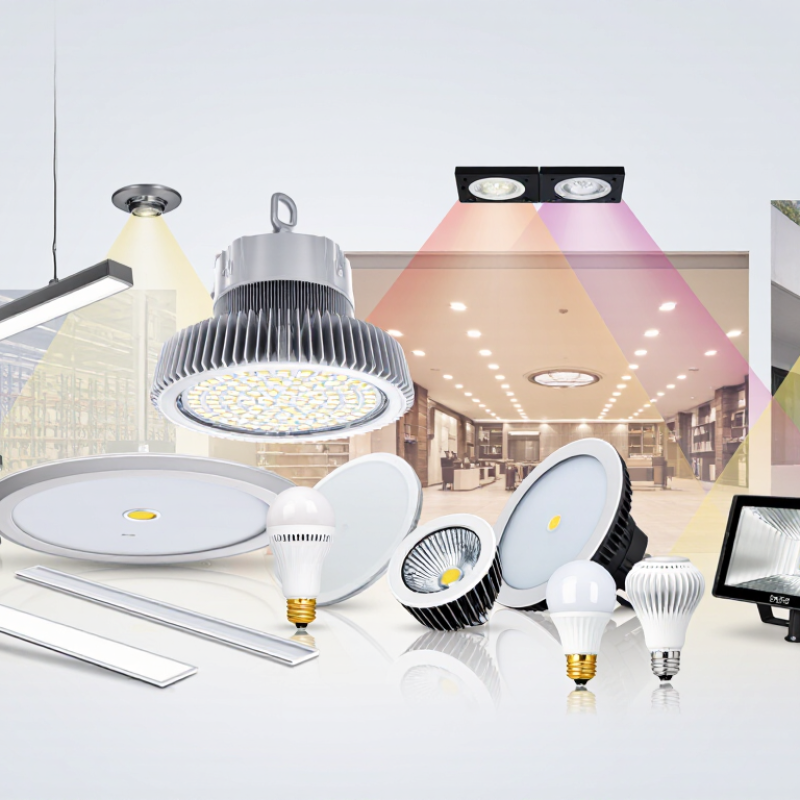
LED lighting begins with three basic measures: lumens, color temperature, and color rendering. Lumens describe visible output, while watts describe energy use. They are not interchangeable. Color temperature affects mood, from warm 2700K light to cool 5000K light. CRI indicates how naturally objects appear under the light. Light quality matters.
The main technology categories serve different spaces. LED bulbs suit general replacement lighting in homes and small offices. Downlights provide focused ceiling illumination. Linear strips work well under cabinets, shelves, and display edges. Panels create broad, even light in commercial interiors. High-bay fixtures support warehouses with tall ceilings. Floodlights and street luminaires handle outdoor areas, but their beam angles need careful planning.
In field assessments, I check glare, shadow patterns, flicker, heat, and access for maintenance. A fixture with high output can still feel uncomfortable near a glossy work surface. Good thermal design protects performance because excessive heat accelerates LED aging. Dimming systems also require compatibility; otherwise, users may notice buzzing or unstable brightness. Measure before buying.
Buyers should review IP ratings for moisture exposure, photometric files for beam distribution, and safety documentation for the destination market. Smart controls can reduce energy use through occupancy sensing and daylight adjustment, but complicated settings often remain unused. This is an overlooked weakness. A practical specification should balance efficiency, visual comfort, service life, installation conditions, and local electrical requirements.
| LED Lighting Type | Primary Technology Category | Typical Power Range | Typical Efficacy | Common CCT | Typical CRI | Useful Life | Typical Protection | Best-Fit Applications | Key Buyer Considerations |
|---|---|---|---|---|---|---|---|---|---|
| LED A-Lamps / Bulbs | General-purpose LED package with integrated driver | 4–25 W | 80–120 lm/W | 2700–6500 K | 80+; 90+ available | 15,000–25,000 h | Usually indoor; enclosed-fixture rating varies | Homes, hotels, offices, retail replacement projects | Base type, input voltage, dimming compatibility, power factor, flicker, and local safety certification |
| LED Tubes | Linear LED with internal or external driver | 8–35 W | 100–160 lm/W | 3000–6500 K | 80+; 90+ for premium environments | 30,000–60,000 h | Indoor; damp-location models available | Offices, schools, warehouses, supermarkets, parking areas | Tube length, ballast compatibility, single- or double-ended wiring, beam angle, and retrofit safety |
| LED Downlights | Recessed LED module with dedicated optic and driver | 5–40 W | 75–120 lm/W | 2700–5000 K | 80+; 90+ for hospitality and retail | 30,000–50,000 h | IP20–IP44; higher ratings for wet areas | Residential interiors, hotels, retail, corridors, and offices | Cut-out size, glare control, trim finish, IC-rating requirements, dimming, and ceiling depth |
| LED Panel Lights | Edge-lit or back-lit LED panel with diffused optical system | 25–60 W | 90–140 lm/W | 3000–6500 K | 80+; 90+ available | 40,000–60,000 h | Indoor; some models rated for damp locations | Grid ceilings, offices, classrooms, hospitals, and commercial interiors | UGR rating, uniformity, flicker, ceiling module size, emergency option, and driver replaceability |
| LED Strip Lights | Flexible PCB with surface-mounted LED packages | 4–25 W/m | 60–130 lm/W | 2200–6500 K; RGB and tunable white options | 80+; 90+ for architectural use | 30,000–50,000 h | IP20–IP68 depending on coating or housing | Cove lighting, cabinets, signage, façades, hospitality, and decorative projects | Voltage drop, LED density, cut-point spacing, heat dissipation, waterproofing, and compatible controller |
| LED High-Bay Fixtures | High-output LED array with industrial heat sink and reflector or lens | 100–300 W | 130–190 lm/W | 4000–6500 K | 70–80+; higher CRI for specific tasks | 50,000–100,000 h | Typically IP65 or higher | Warehouses, factories, sports halls, logistics centers, and high-ceiling retail | Mounting height, lumen distribution, thermal performance, surge protection, occupancy sensors, and controls |
| LED Floodlights | High-power LED array with wide, medium, or narrow beam optics | 20–1000 W | 100–170 lm/W | 3000–6500 K | 70–80+; 90+ for color-critical areas | 50,000–100,000 h | Usually IP65–IP66; IK rating varies | Sports grounds, façades, yards, construction sites, and security lighting | Beam angle, glare, aiming adjustment, wind loading, surge protection, and outdoor corrosion resistance |
| LED Street and Area Lights | Roadway-optimized LED module with asymmetric distribution | 30–300 W | 110–180 lm/W | 2700–5000 K | 70–80+ | 75,000–100,000 h | Typically IP66; IK08–IK10 commonly specified | Roads, streets, parking lots, campuses, pathways, and public areas | Photometric classification, pole spacing, glare, adaptive dimming, surge protection, and maintenance access |
| LED Architectural and Linear Fixtures | Linear LED modules with direct, indirect, or wall-wash optics | 10–80 W/m | 70–140 lm/W | 2200–6500 K; tunable white and RGBW options | 80+; 90–95+ for premium visual environments | 50,000–80,000 h | IP20–IP67 according to installation conditions | Museums, offices, hotels, façades, public spaces, and interior design projects | Color consistency, binning, optical control, profile dimensions, control protocol, and thermal management |
| Smart and Connected LED Fixtures | LED luminaire combined with sensors, wireless or wired controls, and software | 5–300 W | 80–180 lm/W | 2700–6500 K; tunable white available | 80+; dependent on fixture type | 30,000–100,000 h | Indoor or outdoor rating depends on luminaire design | Commercial buildings, warehouses, campuses, offices, and energy-management projects | Control protocol, interoperability, cybersecurity, commissioning, sensor coverage, data ownership, and total cost of ownership |
Lumens measure visible light output. Watts measure energy use. They are different. Color temperature shapes mood, from warm 2700K to cool 5000K. CRI shows how naturally colors appear.
Dimmable panels or adjustable downlights work well. Choose neutral white light and low glare. Test the fixture above the desk. Brightness alone can still feel tiring.
Linear strips fit under cabinets, shelves, and display edges. Panels provide broad, even light in offices and commercial interiors. Check shadows near work surfaces.
High-bay fixtures usually suit tall warehouses. Review mounting height, beam angle, heat control, and spacing. Occupancy controls may reduce wasted energy. They can be ignored.
Floodlights and roadway fixtures need suitable ingress protection ratings. Plan beam angles carefully. Even illumination matters in parking and loading areas. Avoid bright patches and dark gaps.
Glare can appear on glossy desks, screens, or polished floors. Flicker may cause discomfort. Excessive heat accelerates LED aging. Inspect shadows, airflow, and maintenance access before purchase.
Confirm compatibility between the fixture, driver, and dimming protocol. Incompatible systems may buzz or produce unstable brightness. Occupancy and daylight controls can save energy. Complicated settings often remain unused.
Request safety reports, photometric files, flicker data, warranty terms, and ingress ratings. Check local conformity documents before production. Match voltage, emergency functions, and recycling duties. A complete-looking datasheet may still miss one document.
Do not compare wattage alone. Review lumens, beam distribution, service life, and visual comfort. Some LEDs use much less energy than older lamps. The real installation may reveal weaknesses.
This guide explains the fundamentals of Led Lighting and introduces the main technology categories shaping the global market in 2026. It compares common options such as general-purpose lamps, high-bay fixtures, panel lights, street lighting, floodlights, linear systems, and task-oriented products, showing how each type suits different environments and application needs. Readers will also learn how factors such as efficacy, color quality, beam distribution, thermal management, service life, controls, maintenance, and total cost influence product performance.
For international buyers, selecting the right LED lighting requires more than comparing wattage or purchase price. Regional electrical standards, safety requirements, efficiency rules, certifications, voltage conditions, installation practices, and environmental expectations should all be reviewed before sourcing. The article provides a practical framework for defining project requirements, evaluating technical specifications, checking supplier capabilities, confirming compliance documentation, and comparing long-term value. This approach helps buyers choose reliable, efficient, and application-appropriate lighting solutions for projects across different markets.

 Austar