Choosing a Pendant Lamp in 2026 requires more than matching a shade to a room. Global buyers must evaluate light quality, electrical compatibility, safety documentation, shipping conditions, and long-term maintenance.
The International Energy Agency reports that lighting has historically represented approximately 15% of global electricity consumption. Its efficiency guidance supports LED technology, effective controls, and better product performance. The U.S. Department of Energy’s Solid-State Lighting reports also emphasize efficacy, color quality, reliability, and lifecycle value. These findings matter when comparing decorative fixtures with very different drivers, LEDs, and warranty terms.
“Lighting is the jewelry of architecture,” says lighting designer Randall Whitehead. His observation explains why proportion and atmosphere matter as much as technical specifications. A 600-millimeter pendant above a dining table creates a different visual balance than a compact fixture above a kitchen island. Warm 2700K light may suit hospitality spaces, while 3000K often supports residential kitchens and offices.
Check the input voltage before ordering. Confirm dimmer compatibility, color-rendering index, suspension length, ceiling hardware, and replacement-part availability. For bathrooms or covered outdoor areas, verify the appropriate IP rating. Request test reports, installation instructions, and clear certification information from the supplier.
Cost is not the full story.
Freight damage, inconsistent finishes, difficult installation, and unavailable drivers can erase an attractive purchase price. Still, no buying guide can predict every ceiling height, local code, or personal preference. Buyers should challenge catalogue claims, compare measurable specifications, and inspect samples whenever possible. A reliable Pendant Lamp is not merely beautiful; it performs consistently after installation.
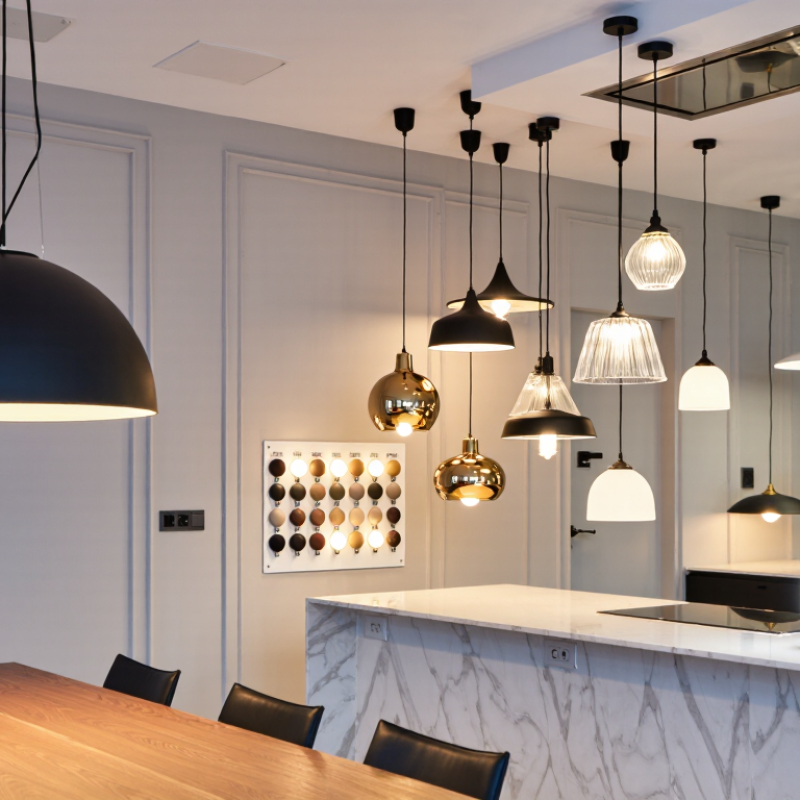
A pendant lamp is a ceiling-mounted light suspended by a cord, rod, or chain. It directs light downward while shaping the room’s visual atmosphere. In 2026, that role matters more because buyers expect efficiency, comfort, and adaptable design from one fitting.
The International Energy Agency reports that lighting uses about 15% of global electricity. The U.S. Department of Energy also states that LED products can use at least 75% less energy than incandescent lighting. These figures make the pendant lamp more than decoration.
Its value becomes clearer above a dining table, kitchen island, or reception desk. A narrow shade can create focused task lighting, while a wider diffuser reduces harsh shadows on faces and worktops. Buyers should check lumen output, color temperature, dimming compatibility, cable length, and ceiling support. Small errors matter. A beautiful lamp may still disappoint when its light feels cold or its suspension is too short. The International WELL Building Institute links lighting quality with visual comfort and occupant experience, but comfort remains personal. Product data cannot fully predict how a lamp will feel at home. Global buyers should also review local electrical requirements, installation instructions, and material durability before ordering.
The definition is simple. The decision is not.
Choosing the right pendant lamp starts with the room, not the product photo. Measure the table, ceiling height, and walking clearance before shopping. A dining pendant often works best when its bottom sits 75–90 centimeters above the tabletop. For a kitchen island, use several smaller pendants or one wider fixture. Keep visual balance in mind. A beautiful choice can still be wrong.
Light quality matters as much as appearance. The U.S. Department of Energy reports that LED lighting uses at least 75% less energy and lasts up to 25 times longer than incandescent lighting. Look for 800–1,500 lumens for a compact dining area, then adjust for room size and surface color. Choose a color temperature near 2700–3000K for bedrooms and dining rooms. Kitchens usually benefit from 3000–4000K. For accurate food and material colors, a CRI of 90 or higher is a practical target.
Check dimmer compatibility, bulb replacement access, and local voltage requirements before ordering internationally. Damp locations need suitable ingress protection, while bathrooms require extra care near water. Energy-efficient lighting still feels harsh when poorly positioned. Installation reviews often reveal this problem too late. I would also test the lamp at night, because online images rarely show glare, shadows, or reflected brightness on glossy surfaces.
Which Materials, Styles, and Light Sources Best Fit Your Needs?
A pendant lamp should match the room’s use, not only its appearance. Metal shades offer durability and defined light, while glass creates a softer, wider glow. Natural fibers add warmth, but they may collect dust and react poorly to damp conditions. Check the shade’s weight, surface finish, and cleaning requirements before ordering. Materials vary more than product photos suggest.
Light changes everything. Warm white light, around 2700K to 3000K, suits bedrooms, restaurants, and relaxed dining areas. Neutral white light, near 3500K to 4000K, supports kitchens, offices, and reading corners. Integrated LED units usually save energy and reduce bulb replacement. However, their drivers can be harder to replace. Socket-based designs offer flexibility, but bulb size and heat limits need careful checking.
Style should support the ceiling height and furniture scale. A wide dome can anchor a dining table, while a narrow cylinder fits a compact hallway. For tall ceilings, choose adjustable suspension cables or rods. Measure twice. Also confirm voltage, frequency, dimmer compatibility, and local safety certification for the destination country. IP ratings matter in humid areas, although many buyers overlook them. I have seen beautiful fixtures fail because the installation environment was never considered. No choice is perfect. A reliable purchase balances visual character, serviceability, and verified electrical details.
When comparing pendant lamps in 2026, treat safety as the first filter, not a selling phrase. Ask for test reports, clear voltage ratings, insulation details, and installation instructions. A qualified local electrician should confirm compatibility with your building’s wiring and ceiling support. For global orders, check the destination’s required conformity marks before payment. Packaging also matters. Crushed foam or loose terminals can signal careless handling.
Energy efficiency needs more than a low wattage printed on the box. Compare light output in lumens, color temperature, power consumption, and expected service life. A 10-watt lamp producing 800 lumens may outperform a 12-watt lamp producing 600. Dimming performance is easy to overlook. Ask whether the driver works with your dimmer and local mains frequency. Warm light around 2700–3000K suits dining areas, while 3500–4000K can support workspaces.
Quality appears in the details you can inspect. Check metal thickness, socket heat resistance, cable flexibility, finish consistency, and replacement-part availability. I once focused too heavily on purchase price and missed freight, duties, electrician fees, and return risk. That comparison was incomplete. Build a landed-cost sheet for each option, then compare warranty terms and response times. A cheaper fixture is not better if one missing component delays installation for weeks. Leave room for uncertainty, because specifications do not always match real-world performance.
2026 Best Pendant Lamp Buying Guide for Global Buyers
A pendant lamp is not globally compliant by default. IEC 60598-1 covers general luminaire safety, while local rules may require additional testing and certification. Confirm rated voltage, frequency, earthing, insulation, and dimmer compatibility before payment. The International Energy Agency reports that lighting uses about 15% of global electricity. Efficient LED sources can reduce operating demand, but only when drivers match the destination grid. Ask for current test reports, wiring diagrams, and photometric files. Do not rely on a product photograph.
Shipping needs equal attention. The World Bank’s Logistics Performance Index 2023 assessed 139 economies and highlighted differences in customs, infrastructure, and delivery reliability. Specify carton dimensions, gross weight, spare parts, and moisture protection in the purchase contract. A glass shade needs internal cushioning, not merely a stronger outer box. Confirm Incoterms, insurance responsibility, import documents, and the correct tariff classification. Transit delays happen.
Installation is where attractive specifications meet real ceilings. Verify the junction box, ceiling load, cable length, canopy size, and local fire requirements. A qualified electrician should isolate power and test grounding before mounting. For heavy fixtures, use suitable anchors, never decorative screws alone. I have seen installation failures caused by missing ceiling reinforcement, not defective lamps. That detail is easy to overlook. Leave space for ventilation around the driver, and keep the instruction sheet with the building records.
| Buying Dimension | What to Check | Reference Data and Practical Facts | Recommended Buyer Action |
|---|---|---|---|
| Electrical Standards | Product safety standard | Pendant luminaires are commonly assessed under IEC 60598-1, the general requirements for luminaires. Fixed general-purpose luminaires may also fall under IEC 60598-2-1. National requirements can add testing, marking, plug, cord, and installation rules. | Request the applicable test report, declaration of conformity, rated voltage, rated frequency, and installation instructions for the target market. |
| Market Compliance | Regional conformity requirements | The European Economic Area generally requires compliance with applicable Low Voltage and EMC requirements, with CE marking used as a manufacturer’s declaration of conformity. The United States commonly uses UL 1598 or equivalent nationally recognized safety requirements, while Canada commonly uses CSA or equivalent certification routes. | Confirm the exact destination country before ordering; a certificate accepted in one market may not satisfy another market’s legal or inspection requirements. |
| Input Power | Voltage and frequency | Common supply systems include approximately 100–127 V at 50/60 Hz and approximately 220–240 V at 50 Hz. A lamp marked “220–240 V, 50 Hz” should not be connected to a 120 V supply without a suitable, approved conversion system. | Match the luminaire rating with the building supply. Do not rely only on the plug shape because plug compatibility does not confirm voltage compatibility. |
| Protection Rating | IP rating and location | IP20 provides protection against solid objects larger than 12.5 mm but no protection against water. IP44 provides protection against objects larger than 1 mm and splashing water from all directions. A dry indoor pendant is often specified as IP20, but the manufacturer’s rating controls. | Use only the stated IP rating for the intended environment. Bathrooms, covered outdoor areas, and damp locations may require a higher rating and local approval. |
| Electrical Protection | Class I, Class II, or Class III construction | Class I luminaires require a protective earth connection. Class II luminaires use double or reinforced insulation and normally do not require a protective earth conductor. Class III luminaires operate from a safety extra-low voltage supply. | Verify the symbol and wiring method on the product label. Do not remove or bypass an earth connection specified by the manufacturer. |
| Light Source | LED performance and replacement | Check rated wattage, delivered lumens, color temperature, color rendering index, beam distribution, rated life, and whether the LED module is replaceable. Typical residential color temperatures include 2700–3000 K for warm white and 4000 K for neutral white. | Compare delivered lumens rather than wattage alone. For hospitality or retail applications, confirm the required CRI and color consistency before purchase. |
| Dimming | Dimmer and driver compatibility | A lamp described as “dimmable” is not automatically compatible with every dimmer. Compatibility depends on the LED driver, dimming method, minimum load, control protocol, and mains voltage. Flicker and limited dimming range can occur with mismatched components. | Obtain the approved dimmer list or driver specifications and test the complete lamp-and-dimmer combination before a large installation. |
| Mechanical Safety | Ceiling load and suspension system | The ceiling outlet box, anchor, hook, or support structure must be rated for the complete fixture weight, including the shade, canopy, lamp holder, suspension cable, and any accessories. Decorative ceiling material alone may not provide adequate structural support. | Confirm the net fixture weight and mounting hardware. For heavy glass or metal pendants, use a structural support point approved for the building type. |
| Installation Height | Clearance above surfaces and walkways | There is no single worldwide minimum height for every application. A frequently used residential planning range is about 75–90 cm above a dining table, while kitchen work areas require sufficient clearance to avoid head impact and heat or steam exposure. Local building rules take priority. | Measure the ceiling height, table height, door swing, and walking path. Confirm the final suspension length on site before cutting or locking the cord. |
| Packaging | Protection against impact and abrasion | Glass shades, ceramic parts, and polished finishes are vulnerable to impact and surface damage. Export packaging should separate fragile components, prevent movement inside the carton, protect the cable from kinking, and include moisture-resistant inner protection. | Request carton dimensions, gross weight, packaging photos, and a packing list. For fragile products, confirm whether spare shades or replacement parts are available. |
| Shipping Cost | Actual weight versus volumetric weight | Air freight and many express services may charge the greater of actual weight and volumetric weight. A commonly used calculation is length × width × height in centimeters divided by 6000, although the divisor and rounding rules vary by carrier and service. | Ask for packed dimensions and both actual and chargeable weight. Compare the delivered cost, not only the product price. |
| Shipping Method | Transit time and risk profile | Express and air freight are generally faster but cost more per kilogram. Sea freight is generally more economical for larger consignments but usually has longer transit and port-handling times. Door-to-door estimates vary by route, customs clearance, season, and service level. | Select the shipping method according to project deadline and fragility. Build in additional time for customs inspection, port congestion, and final-mile delivery. |
| Customs Documentation | Commercial and technical documents | A typical shipment may require a commercial invoice, packing list, transport document, product description, customs classification, country of origin, and, where applicable, conformity or safety documentation. Classification and duty treatment vary by destination. | Ensure the invoice description identifies the product accurately as an electric lighting fitting and confirm the tariff classification with the importer or customs broker. |
| Installation Procedure | Safe installation sequence | A typical sequence is: isolate the circuit, verify that power is off, install the support, connect conductors according to the instructions, secure the canopy, adjust the suspension, fit the light source, and test the fixture. Wiring colors and terminal markings differ by country and product. | Use a qualified electrician where required by local law. Never work on a live circuit, and follow the product’s wiring diagram rather than assuming conductor colors. |
| Inspection and Maintenance | Post-installation checks | Confirm that the fixture is mechanically stable, terminals are enclosed, cables are not pinched, strain relief is functioning, the shade is secure, and the lamp operates without abnormal noise, odor, overheating, or flicker. | Recheck fasteners after initial use, clean according to the material instructions, and replace damaged cords, shades, drivers, or mounting parts before continued operation. |
| Buyer Checklist | Minimum information to collect before purchase | Rated voltage Frequency IP rating Safety class Wattage Lumens Color temperature Dimming method Net weight Packed dimensions Test documents Installation manual | Create a written specification sheet and approve a production sample before confirming a bulk order. |
Metal shades provide durability and more focused light. Glass shades create a softer, wider glow. Natural fibers add warmth but collect dust easily. Damp rooms may damage them. Check weight, finish, and cleaning needs before ordering. Photos can mislead.
Warm white light, around 2700K to 3000K, suits bedrooms and relaxed dining areas. Neutral white light, near 3500K to 4000K, supports kitchens, offices, and reading corners. Light temperature changes the room’s mood significantly. Small details matter.
Integrated LEDs usually reduce energy use and bulb replacements. Their drivers can be difficult to replace. Socket-based designs offer more flexibility. Check bulb size, heat limits, and socket compatibility carefully. Convenience is not everything.
A wide dome can visually anchor a dining table. A narrow cylinder suits a compact hallway. Match the shade size with nearby furniture. Oversized fixtures may crowd small rooms. Measure twice.
Choose adjustable cables or rods for tall ceilings. Confirm the cable length before purchase. Check the ceiling box and available reinforcement. Heavy fixtures need suitable anchors. Decorative screws alone are unsafe for heavy loads.
Confirm voltage, frequency, earthing, insulation, and dimmer compatibility. Request current test reports, wiring diagrams, and photometric files. Check local safety certification requirements. Product photographs cannot prove electrical compatibility. Do not guess.
Specify carton dimensions, gross weight, spare parts, and moisture protection. Glass shades need internal cushioning, not only a strong outer box. Confirm delivery terms, insurance responsibility, and import documents. Transit delays happen. I might still overlook a small packing detail.
Verify the junction box, ceiling load, cable length, and canopy size. A qualified electrician should isolate power and test grounding. Leave ventilation space around the driver. Keep installation instructions with the building records. No fixture is perfect. Careful preparation prevents avoidable failures.
This 2026 guide explains why a Pendant Lamp is more than a decorative fixture: it can shape atmosphere, improve task lighting, and contribute to the overall efficiency and comfort of a space. It covers how to select the right size, height, brightness, and beam direction for dining areas, kitchens, bedrooms, offices, hospitality spaces, and other interiors. Readers will also learn how materials, colors, forms, and light sources influence appearance, durability, maintenance, and energy use.
For global buyers, the guide provides a practical framework for comparing safety, quality, efficiency, and total cost rather than focusing only on the purchase price. It also highlights important considerations such as electrical compatibility, product documentation, packaging, shipping conditions, installation requirements, and local standards. By reviewing these factors together, buyers can make confident purchasing decisions and choose lighting solutions that balance visual appeal, reliable performance, long-term value, and suitability for their intended environment.

Austar