2026 Best Module Light Types for Global Buyers?

Time:2026-10-10 Author:Sophia
0%

Choosing the right Module Light in 2026 requires more than comparing wattage and purchase price. Global buyers now examine efficiency, thermal stability, color quality, installation speed, and supply continuity. The International Energy Agency reports that lighting represents about 15% of global electricity consumption, making efficient product selection commercially and environmentally important. The IEA also identifies LED adoption as a major pathway for reducing electricity demand in buildings, factories, roads, and commercial spaces.

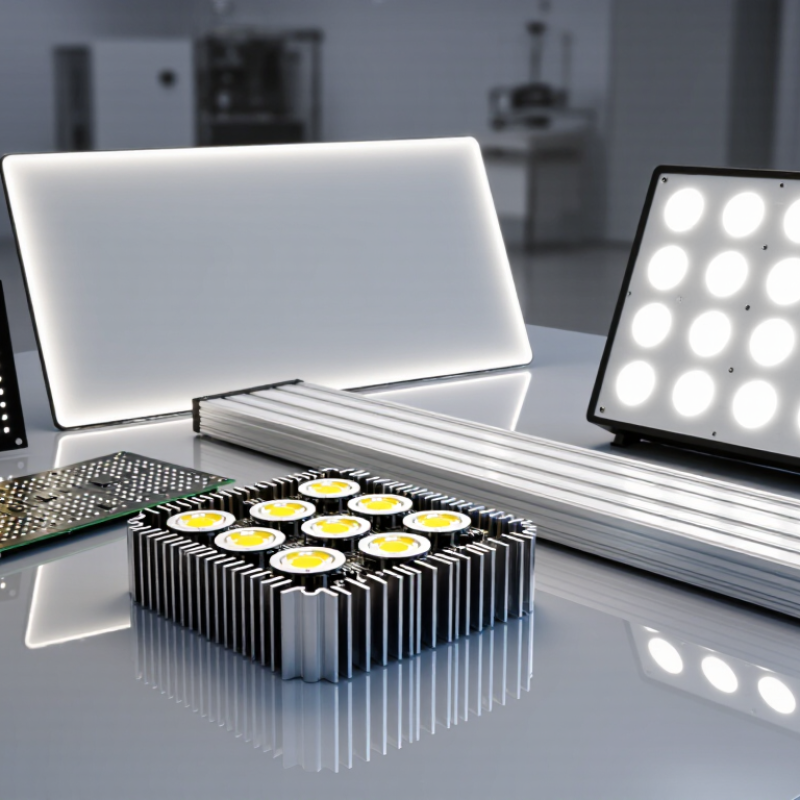
This guide introduces the leading Module Light types, including LED board modules, COB modules, linear modules, backlit modules, and edge-lit designs. Each option behaves differently in a real fixture. A high-density COB module may create intense brightness from a compact area, while a linear module can produce smoother illumination across a long cabinet or sign. In outdoor applications, buyers should check IP ratings, operating temperatures, surge protection, and aluminum heat dissipation. For retail and hospitality projects, CRI, color consistency, and flicker performance deserve equal attention.

The U.S. Department of Energy’s solid-state lighting research highlights efficacy, reliability, controls, and thermal management as central performance factors. Zhaga specifications also support greater interchangeability between LED light engines and compatible components. These references provide useful direction, but they do not remove every purchasing risk. No single Module Light wins every market. That assumption often fails.

Real-world testing still matters. Samples should operate for extended periods before large orders are approved. Buyers should also review LM-80 data, warranty terms, binning information, and replacement availability. This 2026 overview compares each type through practical performance, installation needs, regional demand, and long-term value. Mistakes remain possible, especially when datasheets look better than field results.
2026 Best Module Light Types for Global Buyers?

What Are Module Lights and How Do They Work?

What Are Module Lights and How Do They Work?

Module lights are compact LED units designed for signs, cabinets, channel letters, and shallow display boxes. Each unit usually contains LEDs, a circuit board, a lens, connecting wires, and a protective housing. The lens spreads light across a target surface. A driver supplies controlled electrical power, often at 12V or 24V. Many modules connect in parallel strings, so one failed unit may not turn off the entire installation. However, the wiring layout still needs careful checking.

Common types include single-color modules, RGB modules, RGBW modules, and high-output waterproof modules. Single-color units suit basic lettering and retail signs. RGB versions create changing colors through separate red, green, and blue channels. RGBW adds a dedicated white channel for cleaner illumination. Lens angles also matter. A wide lens can reduce dark spots in shallow boxes. A narrow lens may throw light farther. Small details matter here.

In practical projects, installers should check voltage, power consumption, module spacing, color temperature, and ingress protection. Excessive spacing creates visible shadows between letters. Too many modules can overload the driver and increase heat. Heat is often underestimated. I have seen bright installations lose consistency because the metal backing was poorly ventilated. Test a sample section before full production. Even reliable calculations can miss reflections, surface color, or unusual cabinet depth. alts?

Which Module Light Types Will Matter Most in 2026?

In 2026, module light choices will depend less on novelty and more on installation conditions. Buyers will compare edge-lit, backlit, COB, and lens-based modules for different applications. Each type controls brightness, spacing, heat, and visual uniformity in its own way.

Edge-lit modules suit shallow cabinets and narrow channel letters. They spread light across limited depth. Backlit modules perform better in deeper boxes, especially when larger faces need even illumination. COB modules offer strong brightness in compact spaces, but heat management deserves careful attention. Lens-based modules can improve beam control and reduce dark spots. However, lens angles and mounting distances must match the sign structure. A quick catalog comparison is not enough.

Global buyers will also examine waterproofing, operating temperature, color consistency, power efficiency, and service access. Look for clear test data, production traceability, and samples tested at the intended voltage. Independent verification can reveal differences hidden by attractive specifications. Relevant safety and electromagnetic requirements also vary by market, so technical documents must be checked locally.

Field experience shows that installation quality often decides the final result. A good module can still create shadows when spacing is careless. I have seen buyers prioritize maximum brightness, then face higher heat and energy costs. That choice is understandable, but not always wise. In 2026, the most valuable types will be those that balance optical performance, durability, repairability, and predictable supply. No type wins every wall.

How Do Module Lights Compare by Performance and Application?

2026 Best Module Light Types for Global Buyers?

Module lights differ mainly in optical control, heat management, brightness, and installation flexibility. LED modules suit channel letters, cabinet lighting, and shallow sign boxes. Their compact lenses spread light across uneven surfaces. COB modules create stronger, more continuous illumination, but they need better heat dissipation. In a metal enclosure, poor ventilation can reduce output over time.
Performance depends on more than advertised lumens. Check efficacy, color rendering, beam angle, operating temperature, and voltage tolerance. A lux meter can reveal dark corners that product photos hide. For retail displays, high color rendering helps fabrics and food appear more natural. For outdoor signs, sealed modules with suitable ingress protection handle rain and dust more reliably. I have seen installations fail because spacing was copied from a different material.
Application should guide the choice. Backlit cabinets often need wide-angle modules with consistent diffusion. Deep boxes can use narrower optics and fewer units. Linear modules work well under shelves, inside channels, and along long surfaces. COB modules may fit premium architectural details where visible dots are unacceptable. However, their heat and power density deserve closer review. Buyers should request photometric data, wiring diagrams, test reports, and replacement guidance before approving samples. Regional voltage, safety requirements, and installation practices also affect the final decision. Mistakes still happen when buyers compare price before total energy use.

What Standards Should Global Buyers Check Before Purchasing?

Choosing the right module light starts with the application. Flexible strips suit concealed cove lighting, while rigid modules support signs, cabinets, and shallow channels. Before comparing brightness or price, global buyers should verify the standards behind the product.

Request a technical file, not only a certificate image. Check IEC 62031 for LED module safety and IEC 62717 for performance requirements. Confirm that the driver follows relevant controlgear safety standards. Electromagnetic compatibility should match IEC 55015 or the applicable local requirement. For retail, workplace, or display projects, review IEC 62471 photobiological safety data. It helps identify risks from intense blue light.

Check the ingress rating under IEC 60529. An IP65 module may resist water jets, but it is not automatically suitable for immersion. Ask for test conditions, operating temperature, lumen maintenance, color consistency, and rated life. A claimed 50,000-hour life needs supporting test methods and temperature details. It should not stand alone.

Confirm electrical ratings, wiring polarity, thermal limits, and cutting intervals. Inspect samples for weak solder joints, uneven spacing, or visible hot spots. Also review RoHS, REACH, and market-specific conformity requirements. A CE-style mark alone may not satisfy every destination. Local installation rules can differ, even between neighboring countries. I have seen buyers trust paperwork too quickly. That mistake is expensive. Standards reduce uncertainty, but they do not replace sample testing, supplier audits, and a careful review of the actual installation environment.

2026 Best Module Light Types for Global Buyers? - What Standards Should Global Buyers Check Before Purchasing?

1. LED Module Type Comparison for Global Purchasing
LED Module Type Typical Construction Typical Input Voltage Typical Power Density Typical System Efficacy Best-Fit Applications Main Advantages Main Limitations Key Buyer Checks
Rigid PCB LED Module LEDs mounted on an aluminum or fiberglass printed circuit board, normally supplied as linear, square, or rectangular boards. 12 V DC, 24 V DC, or constant-current operation, depending on the design. Approximately 5–25 W per module or 5–25 W per meter for linear formats. Approximately 90–160 lm/W at system level, depending on LED package, optical cover, current, and thermal design. Linear luminaires, cabinet lighting, signage, display cases, under-cabinet lighting, and general-purpose fixtures. Good mechanical stability, simple installation, consistent spacing, and relatively effective heat dissipation when mounted correctly. Limited bending capability; thermal performance depends strongly on mounting surface and airflow. Confirm PCB material, copper thickness, thermal resistance, LED spacing, current regulation, connector polarity, and mounting method.
Flexible LED Strip Module Flexible printed circuit with surface-mounted LEDs, current-limiting components, and adhesive or mechanical mounting options. Commonly 5 V DC, 12 V DC, or 24 V DC. Approximately 4–30 W per meter. Approximately 70–150 lm/W, depending on LED density, color temperature, drive current, and diffuser losses. Decorative lighting, coves, curved surfaces, furniture, retail displays, and architectural accents. Flexible, lightweight, easy to cut at designated points, and suitable for complex shapes. Voltage drop, adhesive failure, moisture exposure, and heat accumulation can reduce service life. Check cut interval, copper weight, maximum continuous run, IP rating, bend radius, adhesive specification, and compatible power supply.
COB LED Module Multiple LED chips mounted closely on a substrate and covered by a phosphor layer, creating a continuous luminous surface. Typically constant-current or low-voltage DC, depending on module design. Approximately 5–50 W per module. Approximately 80–140 lm/W, with high color uniformity and low visible pixelation. Downlights, spotlights, retail lighting, display lighting, compact luminaires, and applications requiring a smooth emitting surface. High optical uniformity, compact size, low shadowing, and good visual appearance without distinct LED points. Requires careful thermal management; replacement may be less convenient than with discrete LED boards. Confirm thermal interface requirements, junction-temperature limits, color consistency, optical compatibility, dimming method, and replacement strategy.
Edge-Lit LED Module LEDs are positioned along the edge of a light guide plate, which distributes light across a broad illuminated surface. Usually constant-current DC or an external LED driver system. Approximately 10–40 W per panel, depending on panel size and brightness. Approximately 80–130 lm/W at system level. Flat panel luminaires, office lighting, suspended fixtures, retail panels, and low-glare ceiling applications. Thin profile, uniform appearance, broad light distribution, and suitable visual comfort when properly designed. Light-guide quality is critical; edge coupling, panel thickness, and frame design affect uniformity and efficiency. Check luminance uniformity, glare rating, panel dimensions, driver compatibility, thermal path, and light-guide material stability.
Backlit LED Module LED arrays are positioned behind a diffuser or light guide, usually with a reflective cavity and controlled spacing. Commonly 24 V DC or constant-current operation. Approximately 10–60 W per square meter for many signage and panel applications. Approximately 80–140 lm/W at system level. Signage, channel letters, flat panels, light boxes, troffers, and large-area illuminated surfaces. Good uniformity over larger areas, scalable layout, and easier servicing in many sign and panel designs. Requires adequate cavity depth and correct LED pitch; excessive spacing can produce bright and dark zones. Verify LED pitch, minimum cabinet depth, diffuser transmission, luminance uniformity, maximum circuit length, and waterproofing method.
High-Output Linear LED Module High-density LEDs on a rigid aluminum board, often paired with a lens, reflector, or dedicated heat sink. Constant-current DC or an integrated driver system. Approximately 15–60 W per meter. Approximately 100–180 lm/W under specified operating conditions. Industrial luminaires, high-bay systems, commercial linear fixtures, refrigerated displays, and high-brightness applications. High lumen output, efficient linear distribution, and good integration into professional luminaires. Higher thermal load, greater driver requirements, and greater sensitivity to operating current and heat-sink design. Check thermal resistance, operating current, LED temperature, lumen maintenance data, driver output range, and photometric files.
Addressable or Tunable LED Module LEDs or LED groups with individually controlled channels, integrated control components, or separate tunable-white color channels. Commonly 5 V DC, 12 V DC, or 24 V DC, with a separate control signal or control bus. Approximately 5–30 W per meter or module, depending on color channels and control mode. Approximately 60–130 lm/W, depending on the selected color mix and control settings. Dynamic architectural lighting, entertainment, retail displays, smart buildings, and tunable-white installations. Dynamic color, scene control, tunable color temperature, and programmable lighting effects. More complex wiring, control compatibility, electromagnetic-compatibility considerations, and higher installation cost. Confirm control protocol, data direction, maximum data distance, power injection points, fail-safe behavior, color consistency, and software compatibility.
2. Standards and Compliance Checklist for Global Buyers
Compliance Area International or Regional References to Check What the Buyer Should Verify Why It Matters
Luminaire Electrical Safety IEC 60598-1IEC 60598-2-1IEC 60598-2-22 Confirm the applicable luminaire category, insulation system, creepage and clearance, earthing, protection against electric shock, abnormal operation, and marking requirements. These requirements address fundamental safety risks in complete luminaires. The applicable part depends on the product type, such as fixed general-purpose or emergency lighting.
LED Module Safety IEC 62031 Check module construction, electrical protection, thermal safety, insulation, accessible parts, and test conditions for LED modules used in general lighting. A module can comply as a component while the completed luminaire may still require additional safety evaluation.
LED Module Performance IEC 62717 Request rated lumen output, color characteristics, lumen maintenance, temperature limits, switching-cycle information, and performance test conditions. Performance claims are meaningful only when operating current, ambient temperature, thermal conditions, and test duration are clearly stated.
LED Controlgear and Driver Safety IEC 61347-1IEC 61347-2-13IEC 62384 Verify driver output voltage or current, SELV or equivalent protection where applicable, overload behavior, short-circuit protection, dimming compatibility, and declared lifetime. Incorrect driver matching is a common cause of flicker, overheating, premature failure, and inconsistent light output.
Photobiological Safety IEC 62471IEC/TR 62778 Request the risk-group assessment, blue-light hazard information, measurement distance, optical configuration, and any required user warnings. High-intensity LED products may require risk assessment based on spectral output, viewing distance, optics, and intended use.
Electromagnetic Compatibility CISPR 15IEC 61547IEC 61000-3-2IEC 61000-3-3 Check conducted and radiated emissions, immunity, harmonic current, voltage fluctuation, flicker, and test configuration with the actual driver and module. EMC results can change when a module is paired with a different driver, dimmer, controller, cable length, or enclosure.
Ingress Protection IEC 60529 Verify the claimed IP code, test arrangement, cable entry method, connector rating, sealing design, and whether the rating applies to the module or the complete luminaire. An IP rating is configuration-dependent. A protected LED board may lose its rating after field cutting, connector replacement, or enclosure modification.
Impact Resistance IEC 62262 Check the IK rating of the completed enclosure, diffuser, lens, and mounting assembly rather than relying only on the module specification. Impact resistance is especially important for public spaces, industrial sites, sports facilities, and transportation environments.
Regional Market Access CE requirementsUKCA requirementsFCC Part 15RoHSREACH Confirm the destination-market requirements, technical file, declaration of conformity, restricted-substance documentation, labeling, importer information, and applicable radio requirements for connected products. Market-access obligations differ by destination and product configuration. A component declaration may not cover the finished lighting system.
Energy and Ecodesign Requirements Applicable regional energy rulesProduct energy labeling rules Check minimum efficacy, standby power, control compatibility, lifetime information, repairability or replaceability requirements, and energy-label obligations where applicable. Energy requirements may apply to the complete light source or luminaire and can vary according to the destination market and product category.
Environmental Reliability IEC 60068 test methodsProduct-specific qualification plan Request evidence for thermal cycling, damp heat, vibration, corrosion, switching cycles, solder-joint reliability, and adhesive durability when relevant. Environmental qualification helps determine whether a module is suitable for outdoor, humid, refrigerated, industrial, or high-vibration applications.
3. Minimum Technical Information to Request Before Purchase
Document or Data Item Required Information Recommended Acceptance Check
Complete Electrical Specification Rated voltage or current, power consumption, power factor, total harmonic distortion, dimming range, inrush current, and operating temperature. Compare the values with the selected driver, wiring system, control equipment, and destination-market electrical conditions.
Photometric Data Lumen output, luminous efficacy, beam angle, color temperature, color rendering index, chromaticity tolerance, and photometric files where available. Require test conditions and confirm whether the data represents the module, driver-module combination, or complete luminaire.
Thermal Design Data Maximum case temperature, junction-temperature limit, thermal resistance, recommended heat sink, and mounting interface requirements. Verify performance at the highest declared ambient temperature, not only at room temperature.
Lifetime and Maintenance Data Lumen-maintenance value, rated life, ambient temperature, drive current, switching-cycle conditions, and failure-rate information. Reject lifetime figures that do not state temperature, current, test duration, or the applicable lumen-maintenance criterion.
Compliance Documentation Test reports, declarations, safety reports, EMC reports, photobiological assessment, material declarations, and product labels. Check that the model number, electrical configuration, revision, and test sample match the goods being purchased.
Installation and Service Information Wiring diagram, polarity, connector details, maximum cable length, mounting instructions, cutting points, sealing method, and replacement procedure. Confirm that installation does not invalidate the safety, IP, thermal, or EMC claims.
The numerical ranges shown in this table are indicative market ranges rather than guaranteed values. Actual performance depends on LED package selection, drive current, optical components, thermal conditions, driver efficiency, ambient temperature, and the complete luminaire design. Buyers should request model-specific test reports and verify the regulations applicable in the destination market before placing an order.

How Can Buyers Select Suppliers and Manage Installation Risks?

2026 Best Module Light Types for Global Buyers?

Selecting a module light supplier requires more than comparing prices. Buyers should match the light type to the application, climate, and installation method. LED modules with strong thermal control suit signs and shallow channels. Waterproof modules are safer for damp façades and outdoor cabinets. Check voltage tolerance, beam angle, color consistency, and lumen maintenance before approval.

Ask suppliers for production samples, photometric data, wiring diagrams, and material declarations. A serious supplier should explain LED binning, adhesive performance, connector protection, and replacement procedures. Factory audits can reveal weak soldering, poor sealing, or inconsistent testing. Request batch numbers and inspection records. Independent testing adds confidence, especially when products cross several markets with different safety requirements.

Installation risks often appear after delivery. Confirm mounting spacing, cable polarity, power-supply loading, and ventilation before work begins. A five-millimeter spacing error can create visible dark areas on a sign. Use approved sealants and protect cable joints from standing water. Keep spare modules on site. They save time.

Do not trust drawings alone. Test one complete section under real conditions. Review brightness at night, surface temperature, and color uniformity. A perfect checklist does not exist. I still allow extra time for unclear instructions, because rushed installation causes expensive failures. Local electricians should verify compliance with applicable regulations, while buyers retain inspection photos and signed acceptance records.

FAQS

What are module lights used for?

Module lights illuminate signs, cabinets, channel letters, and shallow display boxes. Each unit usually includes LEDs, a circuit board, wires, a lens, and protective housing.

How do module lights distribute power?

A driver supplies controlled power, commonly at 12V or 24V. Many units connect in parallel strings, so one failure may not darken everything.

Which lens angle should buyers choose?

Wide lenses help reduce shadows in shallow boxes. Narrow lenses throw light farther inside deeper cabinets. Small spacing errors can still create dark patches.

What types of module lights are available?

Single-color units suit basic lettering and retail signs. RGB units create changing colors, while RGBW units add a separate white channel.

How should buyers compare performance?

Check brightness, efficiency, beam angle, color rendering, voltage tolerance, and operating temperature. Advertised lumens alone can hide dark corners or uneven color.

What installation details matter most?

Confirm module spacing, cable polarity, driver capacity, and ventilation before installation. A five-millimeter spacing mistake may become visible across a sign.

Are waterproof modules necessary outdoors?

Outdoor cabinets and damp façades need sealed modules with suitable ingress protection. Protect cable joints from standing water and use compatible sealants.

How can buyers test a proposed installation?

Test one complete section under real conditions before full production. Check brightness at night, surface temperature, reflections, and color consistency.

What supplier documents should buyers request?

Request samples, photometric data, wiring diagrams, inspection records, material declarations, and replacement guidance. Documents help, but they do not reveal every practical weakness.

What mistakes should buyers expect during planning?

Heat, unusual cabinet depth, surface color, and poor ventilation can change the result. I still allow extra time because calculations sometimes miss real reflections.

Conclusion

Module Light systems are compact LED lighting units designed to be combined into flexible solutions for signs, displays, architectural features, and other illuminated applications. In 2026, buyers will focus on module types that offer high energy efficiency, consistent brightness, reliable heat management, weather resistance, and easy installation. Different designs may be better suited to shallow spaces, large surfaces, curved structures, or outdoor environments, so performance should be evaluated according to the project’s lighting depth, coverage, color requirements, and operating conditions.

Before purchasing, global buyers should check key standards related to electrical safety, electromagnetic compatibility, ingress protection, material quality, and energy performance in the target market. Supplier selection should include verification of technical documentation, quality-control procedures, warranty terms, replacement policies, and production consistency. Buyers should also review installation instructions, wiring requirements, mounting methods, ventilation needs, and maintenance access in advance. Careful testing and risk planning can help ensure stable operation, reduce installation problems, and achieve dependable long-term lighting performance.


Sophia

Sophia

Sophia is a dedicated marketing professional with an exceptional depth of knowledge about her company's products and services. With a keen understanding of market trends and customer needs, she crafts insightful blog posts that not only inform but also engage readers, enriching the company’s online......