10 Tips for Buying Wall Lights

Time:2026-09-25 Author:Henry
0%

Wall Lights do more than fill an empty patch of wall. They shape how a room feels, where shadows fall, and whether a bedside book is easy to read. The U.S. Department of Energy’s LED Lighting guidance reports that LED bulbs use at least 75% less energy and can last up to 25 times longer than incandescent bulbs. Those figures concern the light source, not every fixture or installation. Still, they show why bulb compatibility and replacement access deserve a place on your checklist.

Small details matter. Picture a narrow hallway with a sconce that throws glare at eye level, or a bathroom mirror lit from only one side. Both problems can be avoided by checking light direction, mounting height, brightness, and damp-location ratings before buying. The Illuminating Engineering Society’s recommendations emphasize choosing light levels for the task and space; one brightness setting rarely suits every room. A dimmer can help, but only when the lamp and control are compatible. Check the labels.

This guide’s 10 tips will help you compare styles, materials, wiring, bulb types, and installation needs without treating appearance as the whole decision. Measure the wall. Note nearby switches and furniture. Then consider how the light will look at night, not only in a showroom photograph. A useful reminder: attractive is not always practical. And “warm” light can feel different on painted plaster, tile, or dark wood. There is no perfect fixture for every home; careful choices simply reduce avoidable surprises.
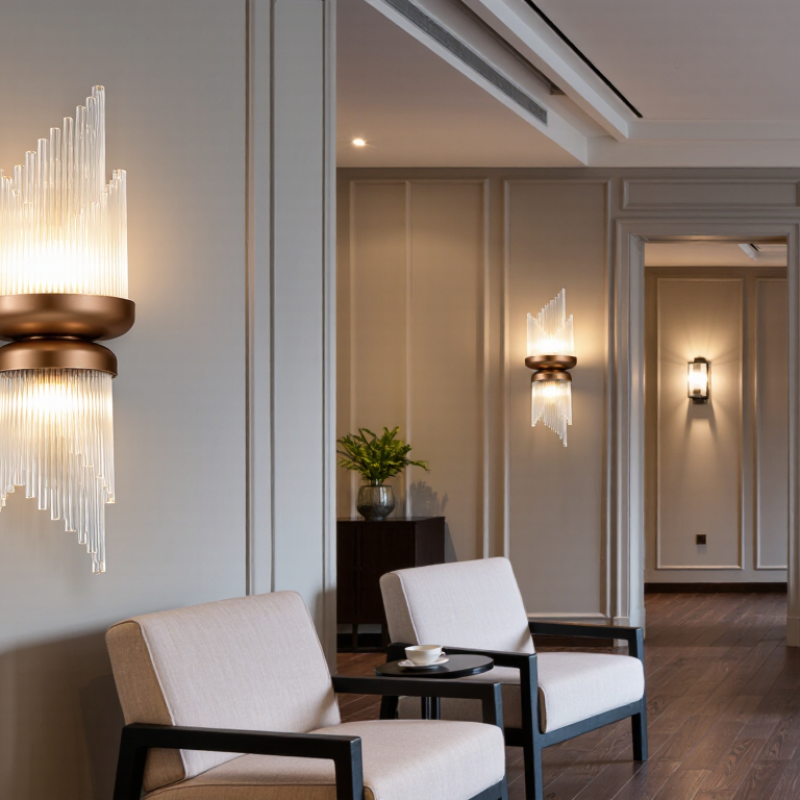
10 Tips for Buying Wall Lights

Define the Lighting Purpose and Compare Output in Lumens

Define the Lighting Purpose and Compare Output in Lumens

A wall light should solve a specific problem before it becomes a decorative choice. Entryways need safe facial visibility, bedrooms need gentle reading light, and bathrooms need even illumination around the mirror. I once chose a fixture by wattage alone. It looked efficient on paper, yet the room still felt dim. Watts measure energy use, not visible brightness. Lumens do.

Compare the fixture’s stated lumens, then consider where those lumens go. A 600-lumen light with a narrow beam may brighten one chair but leave the surrounding wall dark. A frosted shade spreads light more softly, although it can reduce useful output. The IES Lighting Handbook links visual comfort with appropriate illuminance, uniformity, and glare control, not brightness alone. Check the mounting height, beam angle, and wall color before comparing products.

Use the room’s purpose as your practical benchmark. The U.S. Department of Energy reports that LED lighting can use up to 75% less energy and last up to 25 times longer than incandescent lighting. That supports efficient choices, but efficiency does not guarantee comfort. The International Energy Agency has reported that lighting uses nearly 15% of global electricity, making output-per-watt worth examining. Still, published figures can vary with testing methods. Leave room for doubt. Compare measured lumens, color temperature, dimming behavior, and real photographs before buying.

Choose Sconce Height, Using 60–66 Inches as a Common Range

10 Tips for Buying Wall Lights

Choose sconce height carefully. A 60–66-inch mounting height, measured from the floor to the fixture center, suits many living rooms and hallways. It keeps the light near eye level without shining directly into your face. The 2023 Illuminating Engineering Society Lighting Handbook stresses visual comfort, glare control, and appropriate light distribution. Those principles matter more than a rigid measurement.

Walk through the room before drilling. Sit on the sofa, stand near the doorway, and check the fixture from both positions. For a bathroom mirror, place sconces around eye level rather than automatically using 60 inches. A taller user may need a slightly higher position. A shorter user may need less. I have found that wall trim, artwork, and switch access can change the ideal height quickly. The rule helps, but it is not sacred.

Choose efficient light sources too. The U.S. Department of Energy reports that LED lighting can use at least 75% less energy and last up to 25 times longer than incandescent lighting. Select warm, dimmable output for bedrooms and social spaces. Check the fixture’s lumen rating, beam direction, and shade opacity. Bright is not always better. A poorly placed sconce can create harsh reflections on glass, polished stone, or a television screen. Measure twice. Then question the measurement.

10 Tips for Buying Wall Lights — Choose Sconce Height, Using 60–66 Inches as a Common Range

Tip What to Consider Practical Guidance Useful Measurement Before You Buy
1 Set the mounting height For many general-purpose sconces, place the center of the fixture about 60–66 inches above the finished floor. Adjust for room layout, fixture size, and the people using the space. Common starting range: 60–66 in (152–168 cm) to fixture center Check the fixture dimensions and mark its center on the wall before installation.
2 Match height to the task Reading lights and bedside sconces are usually positioned in relation to the seated or lying user, rather than following one fixed whole-room height. Measure from the floor, mattress, or reading position as appropriate Test the proposed position while seated or in bed to reduce glare and reach comfortably.
3 Plan bathroom placement carefully For mirror lighting, sconces are often placed on both sides of the mirror to provide more even facial light. Follow local electrical rules for locations near water. Center each light near face height; confirm clearances for the specific room Check the fixture’s damp- or wet-location rating against the installation location.
4 Choose the right light direction Upward-facing shades can create indirect ambient light, while downward-facing shades can direct light toward a surface. Some designs provide light in both directions. Compare the fixture’s beam direction and light distribution Review product specifications and consider where shadows may fall.
5 Size the fixture for the wall A large sconce can overwhelm a narrow wall, while a very small one may look out of scale beside a wide mirror or doorway. Compare fixture height and projection with nearby trim, furniture, and wall features Use a paper template to preview the fixture’s footprint on the wall.
6 Check spacing between paired lights For a balanced pair, align both fixtures at the same height and position them symmetrically around the mirror, artwork, or other focal point. Measure from the focal point to each fixture center Confirm that doors, cabinets, and mirrors will not obstruct the lights.
7 Consider brightness and bulb compatibility Choose light output for the room’s purpose and check the fixture’s maximum wattage, bulb base, and compatibility with dimmers where applicable. Compare lumens for brightness and kelvins for light color Follow the fixture label and use compatible bulbs and controls.
8 Check projection and clearance A fixture that projects too far may interfere with walkways, doors, curtains, or furniture. Flush and compact designs can suit tighter spaces. Measure from the wall to the fixture’s outermost point Check nearby swing paths and walking areas before selecting a projection depth.
9 Verify the mounting and wiring details Wall lights may require a compatible electrical box and suitable wiring. Installation requirements depend on the fixture and local electrical code. Check the fixture’s mounting plate and electrical requirements Consult a qualified electrician when wiring, box support, or code compliance is uncertain.
10 Preview the finish and maintenance The finish, shade material, and exposed bulb affect the fixture’s appearance and upkeep. Choose materials suited to the room and expected cleaning needs. Compare finish samples with nearby hardware and lighting Review cleaning instructions, replacement-bulb access, and the return policy.

Compare Color Quality on the 0–100 CRI Scale

10 Tips for Buying Wall Lights

When buying wall lights, compare color quality on the 0–100 CRI scale. A higher CRI usually shows fabrics, wood, and skin more naturally. The CIE 13.3-1995 method calculates general CRI, or Ra, from eight pastel color samples. However, standard CRI excludes strong red, known as R9. That matters beside artwork, brick, food, or warm-toned furniture. Look for CRI 90 or higher, and ask for the R9 value when available. Higher is not automatically perfect.

The U.S. Department of Energy’s solid-state lighting research explains that CRI does not fully describe color preference or saturation. The IES TM-30-18 system adds fidelity, gamut, and hue information through Rf, Rg, and color-vector graphics. A wall light with Rf 90 and Rg 100 may appear balanced, while a high Rg can exaggerate colors. Check the actual test report, not only a package claim. Numbers need context.

Use the light at home before choosing several fixtures. Hold a white towel, wooden frame, and red book beneath it. Watch for gray skin, muddy reds, or an overly green wall. I once trusted a CRI 90 label and ignored the light’s color temperature. The room looked colder than expected. That shortcut can fail. Also compare samples under dimmed output, because some lights shift color slightly. Ask about CCT, R9, TM-30 data, and measurement conditions before paying.

Select Color Temperature by Kelvin Rating, Such as 2700–3000K

Kelvin rating describes the color of a wall light, not how bright it is. Lower numbers look warmer, with a soft yellow glow; higher numbers appear cooler and whiter. For bedrooms, living rooms, and hallways, 2700–3000K often feels comfortable without making painted walls look stark. Color matters.

Think about what the light will illuminate. A 2700K sconce beside a cream wall can bring out a gentle, warm tone, while the same bulb may make gray paint look slightly beige. In a reading nook, 3000K can feel a little clearer while remaining inviting. For detailed tasks, compare the fixture’s light with other nearby lamps rather than choosing by Kelvin alone. Brightness and beam direction affect comfort, too.

I still find color temperature easy to misjudge from a product photo. Check the Kelvin rating on the specifications, then view a sample in the actual room if possible. Test it at night, with the wall light on and overhead lights off. If the fixture is dimmable, confirm that its color stays pleasant at lower brightness; some lights can look unexpectedly different. A small difference in Kelvin may be subtle on paper, but noticeable beside a mirror or artwork.

Check Wet-Area Protection Against IEC 60529 IP Ratings

A wall light near a shower or basin needs more than a pleasing finish. Check its IP rating on the product label and installation instructions. The first digit measures protection from solid objects; the second indicates water protection. For example, IP44 offers protection against splashing water, while IP65 is rated against water jets. Neither rating means the fitting can be submerged.

Tip: Match the rating to the exact location. A light exposed to occasional splashes may need a different level of protection from one directly beside a shower. Bathroom zones and requirements can vary by location, so check local guidance before buying. Don’t guess from appearance. A sealed-looking fixture is not proof of a suitable rating.

Also check whether the fitting is approved for the intended installation and follow its stated mounting instructions. Have a qualified electrician confirm wiring and placement where required. Water can travel farther than expected, especially around open showers. I would not rely on distance alone; measure the location and verify the applicable zone. It is easy to focus on brightness and forget protection. That is worth reconsidering.

FAQS

What mounting height works for most wall sconces?

A common range is 60–66 inches from the floor to the fixture’s center. Check it from a sofa and doorway. Eye level matters more than a fixed rule.

Should bathroom sconces follow the same height?

Not automatically. Place them near the user’s eye level beside the mirror. Taller or shorter users may need adjustments.

How can I avoid glare from a wall light?

Sit and stand where people will use the room before drilling. Check reflections on mirrors, glass, polished stone, and television screens. I would still test the spot at night.

Which Kelvin range suits bedrooms and living rooms?

2700–3000K usually gives a comfortable, warm appearance. Lower values look more yellow; higher values look whiter. Color matters.

Does Kelvin tell me how bright a sconce is?

No. Kelvin describes light color, while lumens indicate brightness. Beam direction and shade opacity also change how bright a fixture feels.

How do I choose a color temperature for painted walls?

Compare the light with the actual wall paint. A warm 2700K bulb may make gray paint look beige. Product photos can be misleading.

Are LED wall lights energy-efficient?

LED lighting can use at least 75% less energy and last up to 25 times longer than incandescent lighting. Check the fixture’s specifications.

What should I test before buying a dimmable sconce?

Try it in the room at night, with overhead lights off. Confirm its color remains pleasant when dimmed. I may be overthinking it, but small differences show beside artwork.

Conclusion

Choosing Wall Lights starts with understanding their purpose. Decide whether you need focused illumination for reading or working, gentle ambient light, or a decorative accent, then compare brightness in lumens to find an output suited to the space. Plan the fixture’s position as well: a height of about 60–66 inches from the floor is a common starting range, though room layout and the light’s intended use may call for adjustments.

Consider light quality and conditions before making a selection. The Color Rendering Index, or CRI, runs from 0 to 100; a higher rating generally helps colors appear more natural. Choose a color temperature by its Kelvin rating, with 2700–3000K offering a warm, comfortable glow. For bathrooms or other damp locations, check the fixture’s protection rating under IEC 60529 and select an IP rating appropriate to the level of exposure. Together, these checks can help you choose a practical and inviting light.


Henry

Henry

Henry is a dedicated marketing professional with a profound expertise in the company's offerings. With years of experience in the industry, he possesses an impressive understanding of the market dynamics and consumer behaviors that drive success. Henry is committed to sharing his insights through......